Disclosure: This post contains affiliate links. If you buy through our links, we earn a small commission at no extra cost to you. Read our affiliate policy.
The front load washing machine debate has been raging in Indian households for over a decade. Every year, more families make the switch — but every year, just as many regret buying one without doing their homework. The truth is somewhere in the middle: a front load machine is genuinely transformative for the right household and genuinely frustrating for the wrong one.
This guide will tell you exactly which kind of household you are.
We cover the technical differences, the honest advantages and honest disadvantages, who should buy one and who should absolutely not, and a detailed breakdown of the best models by price segment for India in 2026.
1. What Actually Makes Front Load Different? The Engineering Behind the Hype
Most people know front load machines look different. What they don't know is why that design matters — and why it produces better results for specific types of washing.
Drum Direction and the Tumble Action
A top load machine has a vertical drum with an agitator (or impeller) that spins clothes in a circular motion through water. Clothes are pushed and pulled horizontally.
A front load machine has a horizontal drum that rotates clothes in a tumbling arc — clothes are lifted to the top of the drum and then dropped back through the water repeatedly. This tumbling action is gentler and more consistent than the agitator-pull of top load machines.
The practical result: fewer micro-tears in fabric, particularly in delicate materials like silk, chiffon, and fine cotton — all crucial for Indian households where silk sarees, silk kurtas, and fine dupattas are part of regular wardrobes.
Water Usage: Front Load Wins by a Large Margin
| Machine Type | Rated water use | For a 7 kg load |
|---|---|---|
| Front Load (LG models we list) | 7.4–8.6 L per kg | About 50–60 litres |
| Top Load (LG models we list) | 13–17.5 L per kg | About 90–120 litres |
These are the BEE-label figures from the listings. A front load uses roughly 40–60 litres less water per 7 kg load; for a family doing 5 washes a week, that's roughly 10,000–15,000 litres a year.
For cities like Bengaluru, Chennai, and Hyderabad — where tanker water costs ₹3–₹5 per litre — this water saving has direct monetary value beyond just environmental benefit.
RPM: Why Spin Speed Matters in India
Front load machines typically spin at 1000–1400 RPM, compared to 700–800 RPM in top load machines.
Higher RPM means more water is extracted from clothes during the spin cycle. This has two practical benefits for Indian households:
- Clothes dry faster — critical during monsoon season when air drying can take 2–3 days in humid coastal cities
- Less time on the clothesline — reduces risk of musty smell in the fabric, a common complaint during June–September in Mumbai, Kolkata, and coastal Tamil Nadu
2. Real Advantages for Indian Households
Silk Saree and Delicate Fabric Care
In many Indian homes, a washing machine's ability to handle silk sarees is a primary purchase criterion. Front load machines, with their gentle tumble action and dedicated delicate cycles (some with cold-water silk programs), genuinely clean fine silks without the snagging and stretching that agitator top load machines cause.
Verdict: If you own Kanjivaram, Banarasi, or Mysore silk sarees worth ₹5,000–₹50,000+, a front load machine's fabric care can justify its price premium entirely.
Electricity: Small Either Way
Every front load we list is 5-star. Their listings give about 0.05–0.07 kWh per kg per cycle, so a 7 kg wash costs roughly ₹2.50–₹3.50 at ₹7 a unit. Most of that is heating water, because the rated front-load cycle is a warm wash. A top load washing in cold water uses far less per cycle. Use cold water for everyday loads on either type and the electricity cost is small.
Hard Water Efficiency with the Right Detergent
Front load machines use High-Efficiency (HE) detergent in smaller quantities, and the tumbling action produces better lather distribution. In hard water areas (most of peninsular India and parts of north India), front load machines combined with liquid HE detergent (like Surf Excel Matic Front Load) produce noticeably better results than top load machines because the mechanical tumble action compensates for reduced lather caused by hard water minerals.
Important caveat: Some front load machines develop limescale in the drum and door seal over time in very hard water areas (TDS above 500 ppm). Running a monthly drum-clean cycle with a dedicated cleaner (or white vinegar) prevents this.
3. Honest Disadvantages — What Salespeople Won't Tell You
The Price Premium Is Real: ₹10,000–₹15,000 More
A well-rated 7 kg top load costs about ₹16,000–₹20,000. The cheapest well-rated front loads we list start around ₹25,000 (6 kg) to ₹27,000 (7 kg). The gap is closing, but it remains significant.
For a household with a total appliance budget of ₹20,000–₹22,000, a front load machine is simply not financially viable in 2026.
Installation Height Requirements
Front load machines are loaded from the front, which means you cannot place them directly on the floor if that causes back strain. Most families install them on a raised platform or a stacking pedestal, which adds ₹2,000–₹5,000 in setup cost and requires precise measurements in compact Indian bathrooms and utility rooms.
No Mid-Cycle Additions
Forgot to add a sock? In a top load machine, just lift the lid. In most front load machines, the door is locked once the cycle begins and water fills the drum. Some premium models (IFB, LG's TurboWash range) have a "add garment" door feature mid-cycle, but this is limited to the early stages of the cycle only.
For Indian households where clothes are frequently added mid-cycle — especially in large families — this is a genuine daily inconvenience.
Longer Cycle Times
A standard front load wash cycle runs 45–75 minutes. Top load machines typically complete a cycle in 30–45 minutes. For joint families or households doing multiple loads daily, this slower throughput is a real constraint.
Some brands offer Quick Wash programs (15–30 minutes), but these use less water and mechanical action, producing results closer to a rinse than a deep wash.
Door Seal Maintenance
The rubber gasket (door seal) in front load machines traps lint, soap residue, and moisture. Without regular cleaning (wiping dry after each use, monthly deep cleaning), this seal develops mould — producing that characteristic musty smell many front load owners complain about. This is a genuine maintenance requirement, not a myth.
4. Who SHOULD Buy a Front Load Washing Machine in India
You are a strong candidate for a front load machine if:
- You live in an urban flat with a dedicated utility area or bathroom with adequate drainage and ventilation
- You own silk sarees, fine cotton kurtas, or premium delicates that need gentle wash cycles
- You're in a water-scarce city — Bengaluru (ranked chronically water-stressed), Chennai, Hyderabad, or Pune — where water conservation matters economically and practically
- You have a household of 2–4 people with predictable washing volumes (1–2 loads per day maximum)
- You have time for the cycle — your household doesn't need clothes washed and ready in 30 minutes
- You're willing to maintain the machine — wiping the door seal after each wash is a 30-second habit that prevents 90% of front load problems
5. Who Should STICK to a Top Load Machine
A top load machine is the smarter choice if:
- You're in a joint family of 6+ where 3–4 loads per day are common — the slower front load cycle creates a genuine bottleneck
- Your total appliance budget is under ₹20,000 — at this price, top load machines offer far better value with more capacity and features
- You're in a hard water area with poor service access — front load machines have more complex mechanisms (door gasket, bearings, drain pump) that are more expensive to service, and service availability in Tier 3 cities or rural areas may be limited
- You frequently add clothes mid-cycle — a habit deeply embedded in Indian laundry workflows that a front load machine will constantly frustrate
- Monsoon causes flooding risks in your utility area — front load machines should never be operated in flooded or excessively humid conditions due to their lower-positioned electrical components
6. Price Segments and Recommended Models
Every model below is rated 4.0★ or higher on Amazon with at least 100 reviews and real monthly sales (September 2026).
Under ₹28,000 — Entry-Level Front Load
- IFB 6 Kg Diva (about ₹25,000, 4.3★): the cheapest front load we list, with steam and a 4-year comprehensive warranty. Suits a couple.
- Whirlpool 7 Kg Supreme Care (about ₹27,300, 4.0★): steam and an in-built heater.
- LG 7 Kg, Essence White (about ₹27,500, 4.2★ from 942): the best-selling front load we list (1,000+ a month), Direct Drive and steam, only 44cm deep.
- Haier 8 Kg (about ₹27,700, 4.0★): the cheapest 8 kg we list, with a 4-year comprehensive and 12-year motor warranty.
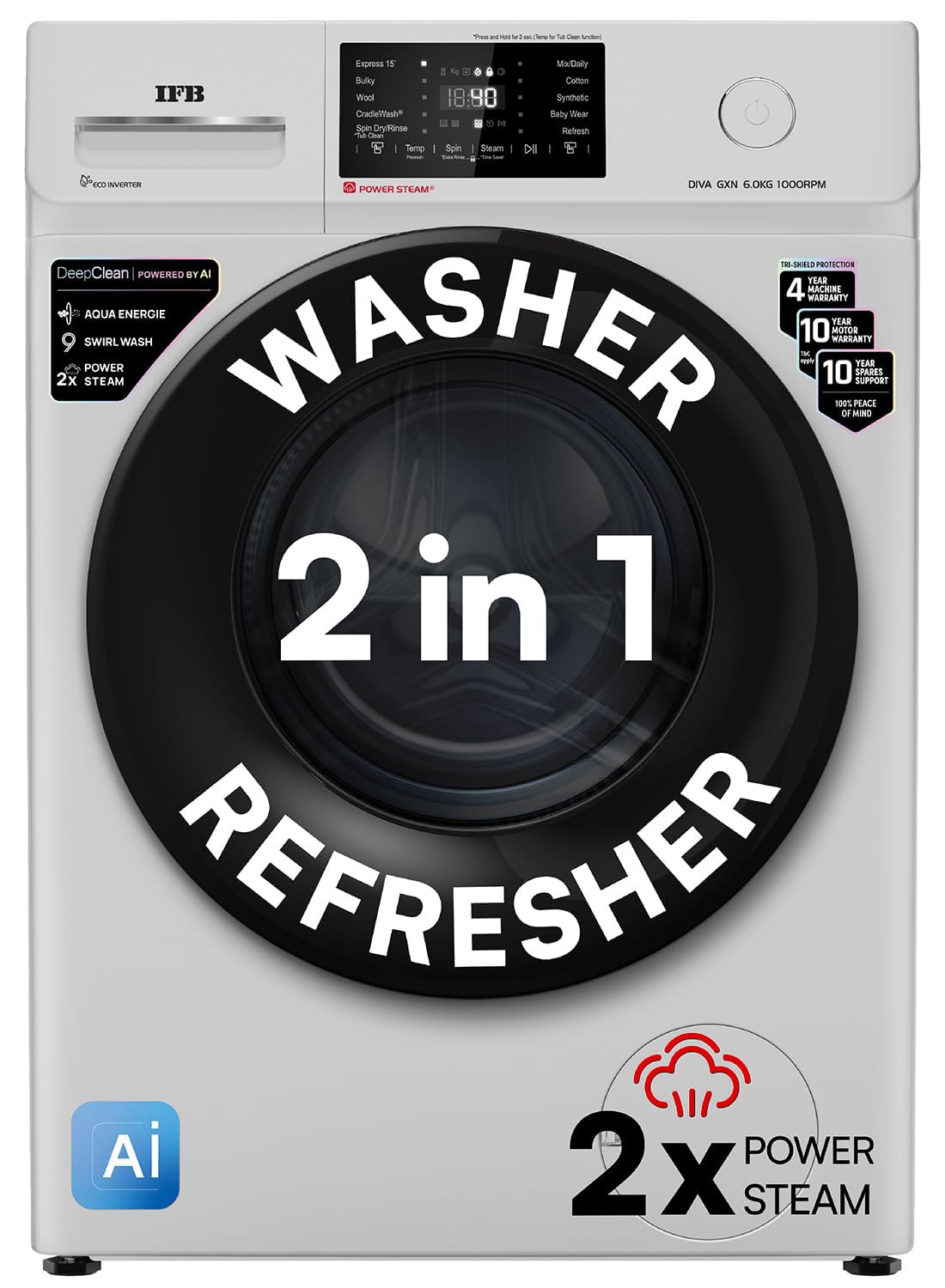
IFB 6 Kg 5 Star DeepClean AI Front Load (Diva GXN 6010)
Couples wanting the cheapest front load we list
₹28,000–₹36,000 — The Best Value Zone
- IFB Serena 7 Kg (about ₹30,300, 4.4★): steam, Wi-Fi, 4-year warranty.
- Bosch 8 Kg (about ₹31,500, 4.2★ from 2,471): 1400 RPM, 12-year motor warranty.
- LG 7 Kg, Middle Black (about ₹33,000, 4.3★ from 2,787): the same machine as the white one above, with more ratings.
- IFB Senator 8 Kg (about ₹35,200, 4.4★): rated at 42 dB.
- Bosch 8 Kg, Shiny Silver (WAJ2826BIN) (about ₹35,200, 4.2★ from 3,610): the most-reviewed front load we list; a near twin of the white Bosch above.
- Samsung 8 Kg (about ₹35,800, 4.2★): 1400 RPM, 21 programs.
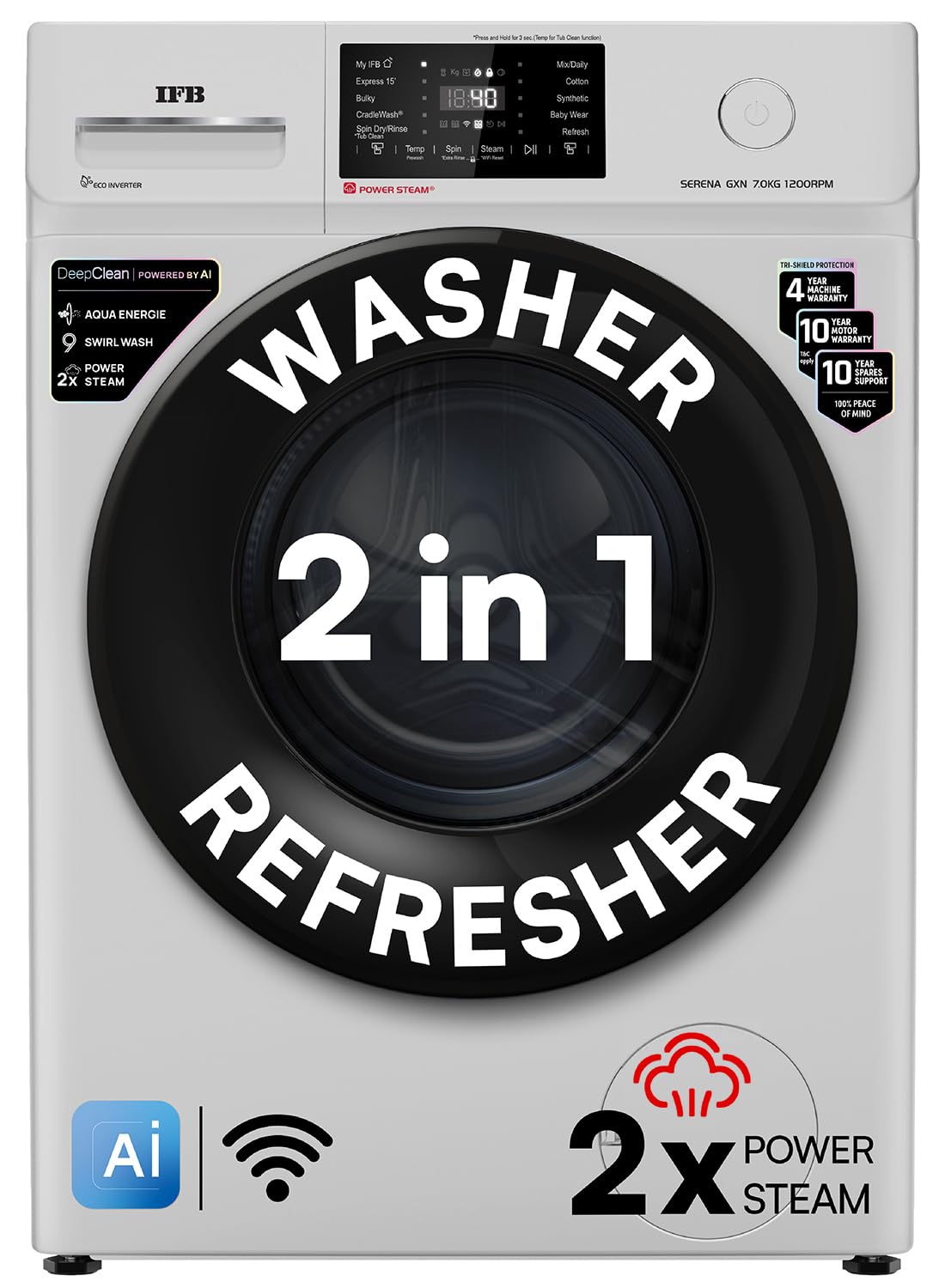
IFB 7 Kg 5 Star DeepClean AI Wi-Fi Front Load (Serena GXN 7012)
Couples and families of 3 wanting a highly rated front load
₹36,000 and Up — 8–12 Kg with Every Feature
- IFB Executive 9 Kg (about ₹38,300): the highest-rated washing machine we list at 4.6★.
- Samsung 9 Kg (about ₹41,200, 4.2★): Super Speed 39-minute cycle, heater, Wi-Fi.
- LG 9 Kg AI Direct Drive (about ₹42,000, 4.3★): one of the best-selling front loads we list (900+ a month).
- Samsung 12 Kg (about ₹45,800, 4.3★): the largest machine we list.
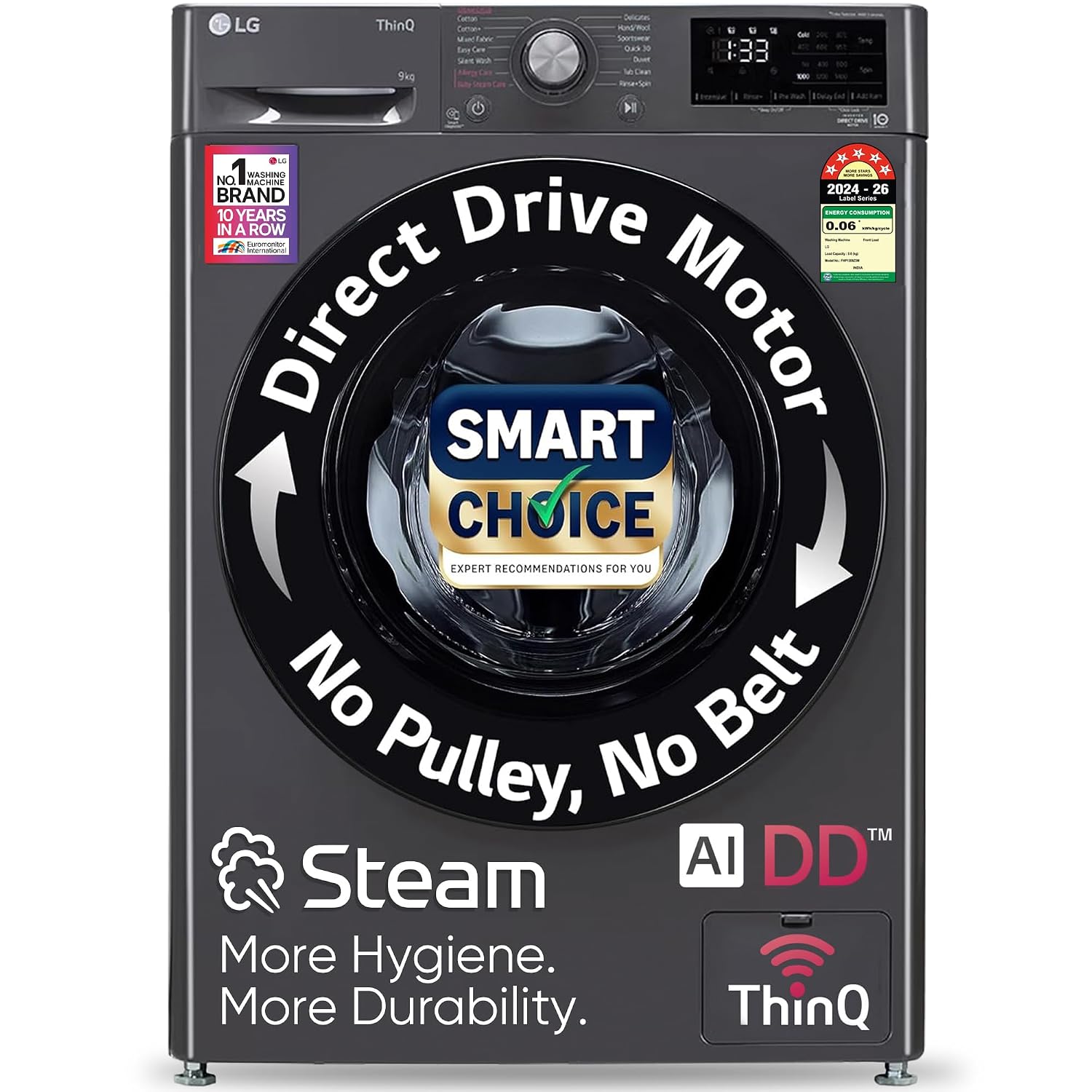
LG 9 Kg 5 Star AI Direct Drive Steam Wi-Fi Front Load (FHP1209Z5M)
Families of 4-5 wanting a best-selling 9 Kg front load with steam and Wi-Fi
7. Brand Comparison: Front Load Machines in the ₹30,000–₹40,000 Range
| Brand & Model | Capacity | Max RPM | Warranty | Best For |
|---|---|---|---|---|
| Bosch WAJ28260IN | 8 kg | 1400 RPM | 2 Yr (12 Yr Motor) | Lowest price, longest motor warranty |
| LG FHB1208Z4M | 8 kg | 1200 RPM | 2 Yr (10 Yr Motor) | Direct Drive, steam, Wi-Fi |
| IFB Senator GXN 8012 CMS | 8 kg | 1200 RPM | 4 Yr Comprehensive (10 Yr Motor) | Longest warranty, quietest (42 dB) |
| Samsung WW80T504DAX1TL | 8 kg | 1400 RPM | 2 Yr (10 Yr Motor) | Best wash-program variety (21 programs) |
Check the linked product pages for current live pricing.
How to Choose Among These Four:
- Lowest price and longest motor warranty: Bosch (about ₹31,500, 12 years on the motor)
- Highest rated and longest comprehensive warranty: IFB (4.4★, 4 years comprehensive)
- Most wash-program variety: Samsung (21 programs on the WW80T504DAX1TL)
8. Frequently Asked Questions (FAQs)
Q1. Which is better for Indian clothes — front load or top load?
A: For mixed Indian wardrobes (cotton kurtas, synthetic salwars, silk sarees, denim, children's uniforms), a front load machine's tumble action is gentler and more effective. However, for heavy-duty items like towels, bedsheets, and denim, both types perform similarly. The clear advantage of front load is specifically for delicates and silks.
Q2. Is IFB really the best front load brand for India?
A: IFB's front loads are the highest rated we list (4.3–4.6★), carry a 4-year comprehensive warranty, and include Aqua Energie for hard water. LG sells more and publishes lower water use; Bosch is cheaper at 8 kg with a 12-year motor warranty. Check service coverage for your pin code whichever you choose.
Q3. My front load machine smells musty. How do I fix it?
A: This is caused by moisture and detergent residue trapped in the door gasket and drum. Immediate steps:
- Run a drum clean cycle (most machines have this built in) with no clothes and 1 cup of white vinegar or a drum cleaner tablet
- Wipe the door gasket dry after every wash — lift the rubber folds and wipe inside
- Leave the door slightly ajar after each wash to allow airflow
- Switch to liquid HE detergent from powder — powder leaves more residue
Ongoing prevention: run a drum clean cycle once a month.
Q4. Can I wash a Kanjivaram silk saree in a front load washing machine?
A: Most premium front load machines (IFB, LG, Samsung) offer a dedicated delicate or saree cycle at cold or 20°C with very low spin speed (400–600 RPM). For Kanjivaram or other heavy silks with zari work, we recommend using this cycle with silk-specific liquid detergent (Genteel, Pril Silk). However, extremely valuable or antique silks should always be dry-cleaned — no machine, front load or top load, is completely risk-free for heirloom sarees.
Q5. Do front load machines work well with hard water in cities like Delhi or Jaipur?
A: Hard water (high TDS) reduces detergent lathering efficiency in all washing machines. Front load machines handle this better than top loads due to their mechanical tumble action, but you should:
- Use liquid HE detergent (performs better than powder in hard water)
- Install an inline water softener if your TDS is above 600 ppm (costs ₹800–₹2,000)
- Run a drum clean monthly to prevent limescale buildup
Q6. Should I buy extended warranty for a front load machine?
A: For front load machines priced above ₹30,000, yes — strongly recommended. Extended warranty typically costs ₹2,000–₹4,000 for 3 additional years (total 5 years). A single door gasket replacement or bearing repair on a front load machine can cost ₹3,000–₹6,000 out of warranty. The extended warranty pays for itself with even one service incident.
Q7. Is it true that Bosch front load machines last longer than other brands?
A: We haven't found reliable lifespan data by brand, so we won't claim one lasts longer. What you can compare is the warranty: Bosch's 8 Kg models carry 12 years on the motor, IFB gives 4 years comprehensive, and LG and Samsung give 2 years comprehensive with 10 on the motor. Bosch service is also thinner outside metros.
The Final Word: Should You Buy a Front Load in India in 2026?
Buy front load if: You're a family of 2–5 in an urban metro or Tier 1 city, you care about fabric care for delicates and silks, you have a budget of ₹28,000+, and you're willing to spend 30 seconds wiping the door seal after each wash.
Stick with top load if: You have a large joint family, your budget is under ₹22,000, you live in an area with limited appliance service access, or you need the flexibility to add clothes mid-cycle.
The front load machine is genuinely superior technology. But technology only adds value when it matches the household's actual needs. Make this decision with your eyes open, and you'll be happy either way.
Related Articles
- LG vs Samsung Washing Machine India
- Front Load vs Top Load Washing Machine India
- Best Washing Machine for Joint Family India
- Best Washing Machine Under ₹20,000 India
Related Reading
- Best Washing Machine in India 2026 — Expert-ranked front load picks
- Front Load vs Top Load — Which Is Better? — Full comparison
- LG vs Samsung Washing Machine India — Brand head-to-head
Our Top Front Load Picks
Best Front Load Overall
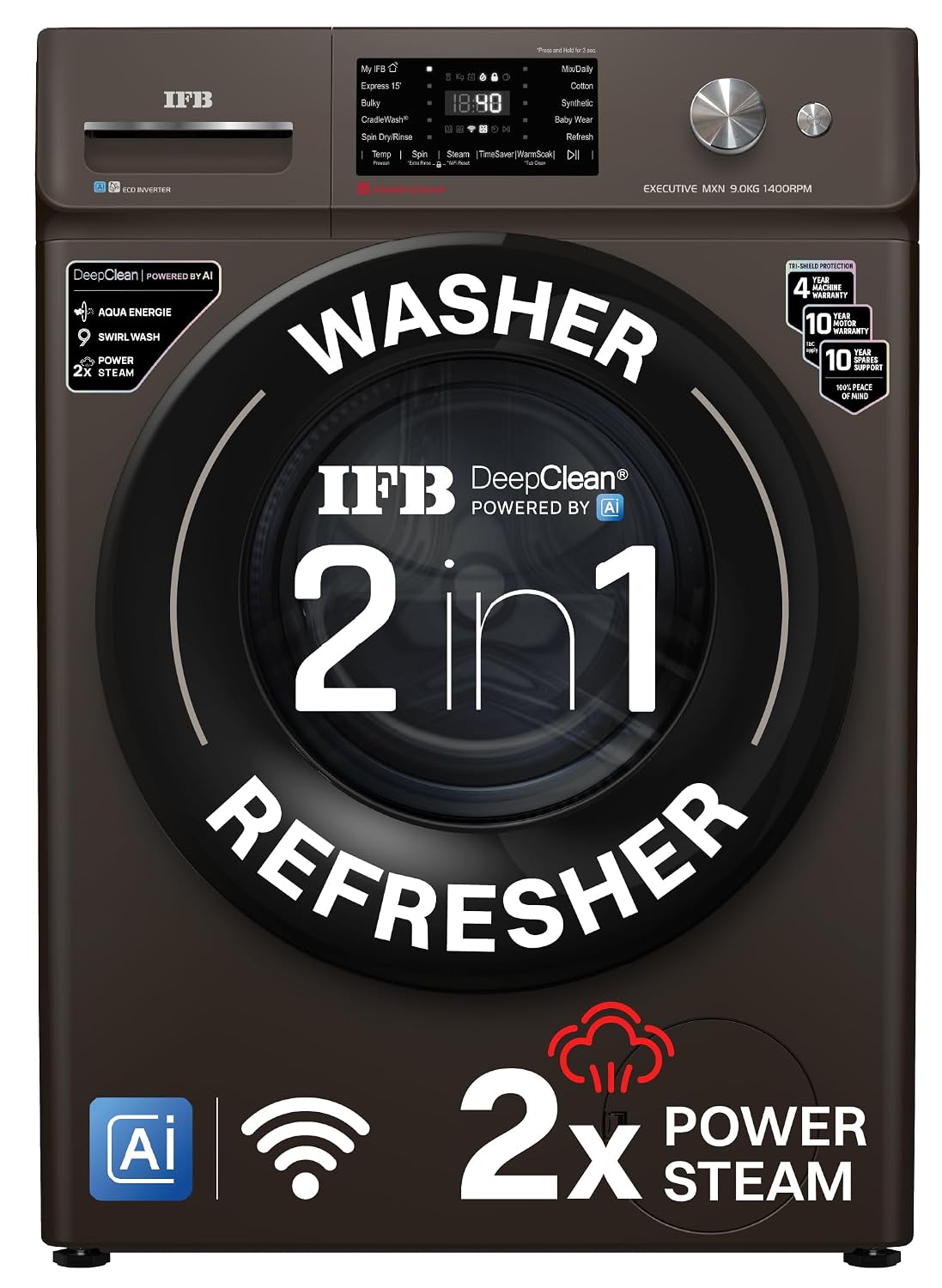
IFB 9 Kg 5 Star DeepClean AI Wi-Fi Front Load (Executive MXN 9014K)
Families of 4-5 wanting the highest-rated front load we list
Best LG Front Load
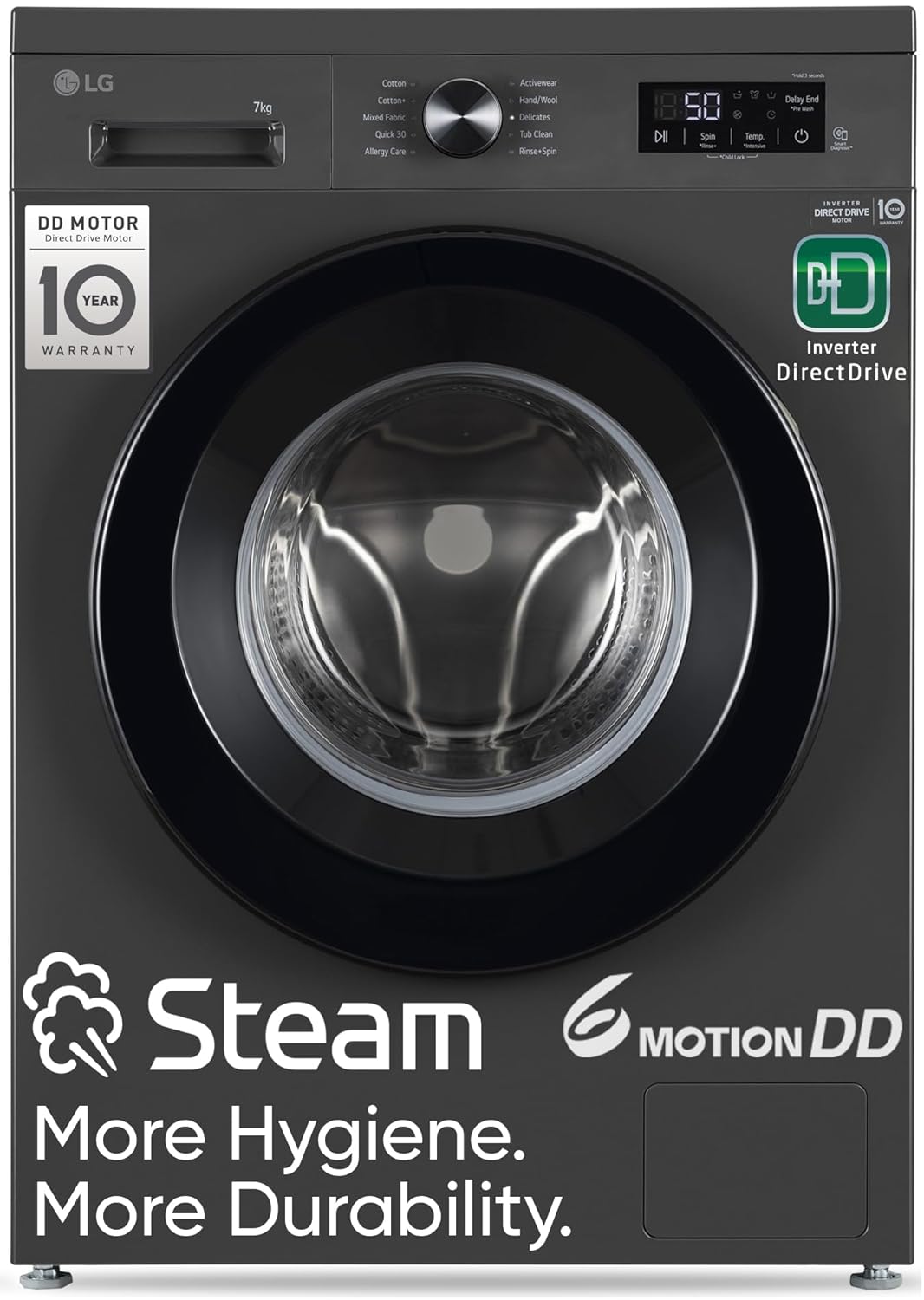
LG 7 Kg 5 Star Inverter Direct Drive Steam Front Load (FHB1207Z2M)
Families of 3 wanting a well-proven LG front load
Best Premium Front Load
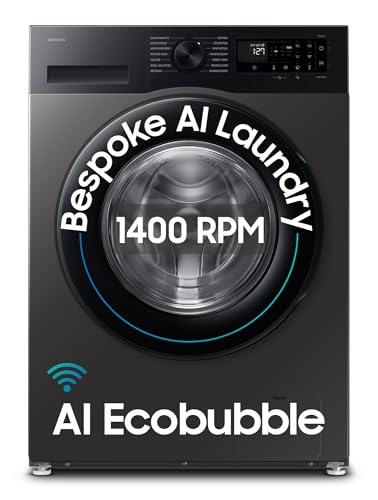
Samsung 9 Kg 5 Star AI Ecobubble Super Speed Wi-Fi Front Load (WW90DG5U24AXTL)
Families of 4-5 wanting a premium front load with a heater and Wi-Fi
See all front load vs top load options → Best Washing Machine in India 2026