Disclosure: This post contains affiliate links. If you buy through our links, we earn a small commission at no extra cost to you. Read our affiliate policy.
LG and Samsung sell more washing machines in India than anyone else, and both have well-rated, fast-selling models of every type. The brand matters less than the specific model, so this guide compares them type by type.
Every model here passes our test: rated 4.0★ or higher on Amazon, at least 100 reviews, and at least 50 bought in the past month. We list 10 LG and 9 Samsung washing machines. Ratings, review counts and sales are from Amazon India as of late September 2026.
Quick Answer
Is LG or Samsung better for washing machines in India?
It depends on the type. LG has our top overall pick (the 7 Kg Smart Inverter top load), the most-reviewed washing machine we list (the 7 Kg semi-automatic) and the best-selling front load (the 7 Kg FHB1207Z2W in white). Samsung has the most-reviewed top load (7 Kg Ecobubble), faster-spinning front loads (1400 RPM) and the largest machine we list (12 Kg). Both give 2 years comprehensive and 10 years on the motor for fully automatic models.
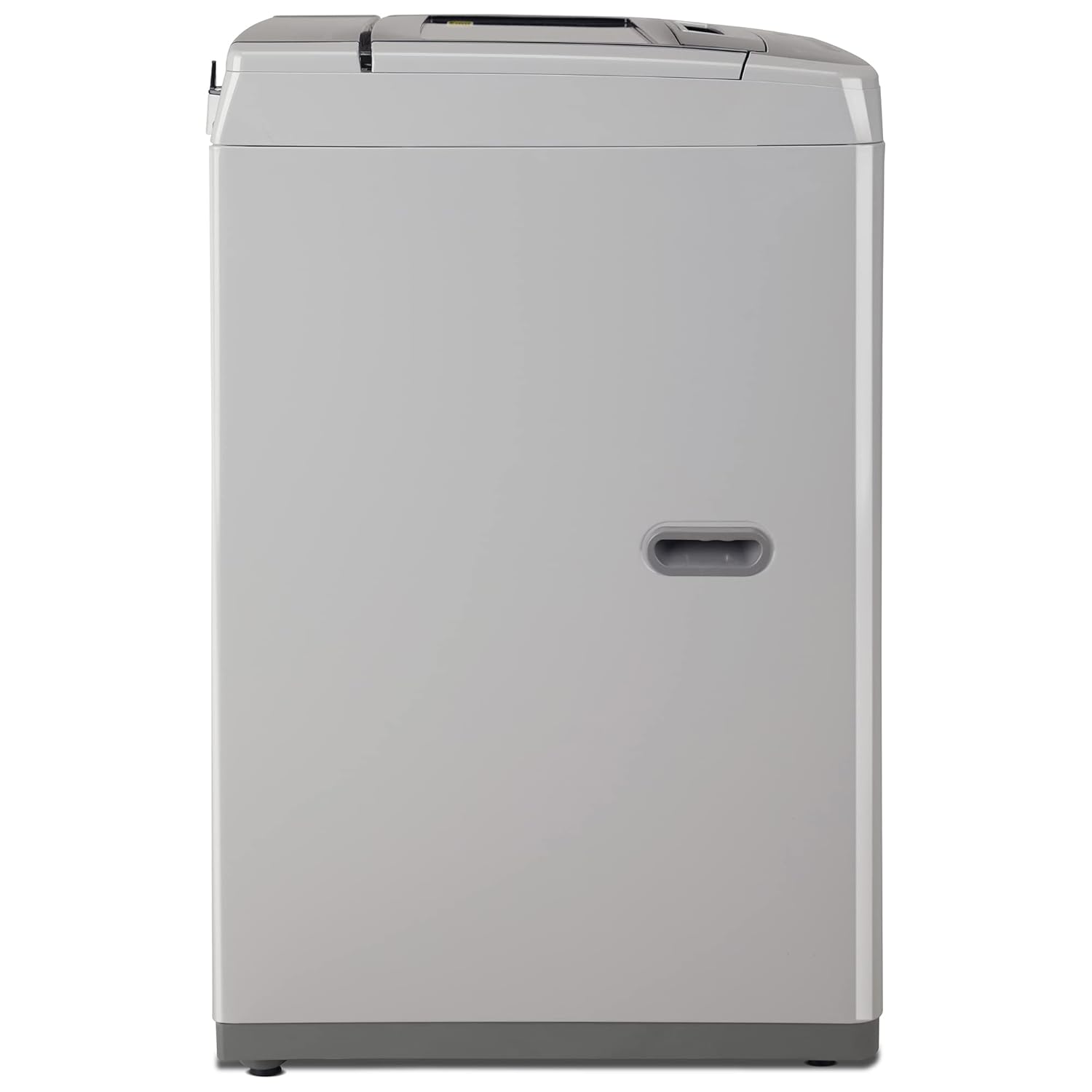
OUR TOP PICKBest OverallLG 7 Kg 5 Star Smart Inverter TurboDrum Fully Automatic Top Load (T70VBMB1Z)
Families of 3-4 wanting the best all-round fully automatic top load
4.2 (3,005)₹18,990₹27,49031% off
Warranty and Service
On the current listings, LG's and Samsung's fully automatic machines both carry 2 years comprehensive + 10 years on the motor; their semi-automatics carry 2 years + 5 years on the motor. Samsung's listings also mention a 20-year motor warranty offer tied to specific purchase dates, so check the terms on the day you buy.
Both brands have large service networks, but coverage varies by city. Check the brand's service locator for your pin code before buying.
Model by Model
Semi-Automatic, 7 Kg — LG
| LG P7020NGAZ | Samsung WT70M3000UU | |
|---|---|---|
| Rating | 4.4★ (8,450) | 4.2★ (2,735) |
| Bought in past month | 1,000+ | 200+ |
| Spin | 1300 RPM | 1300 RPM |
| Drying aid | Wind Jet Dry | Air Turbo Drying |
| Price | About ₹11,500 | About ₹10,500 |
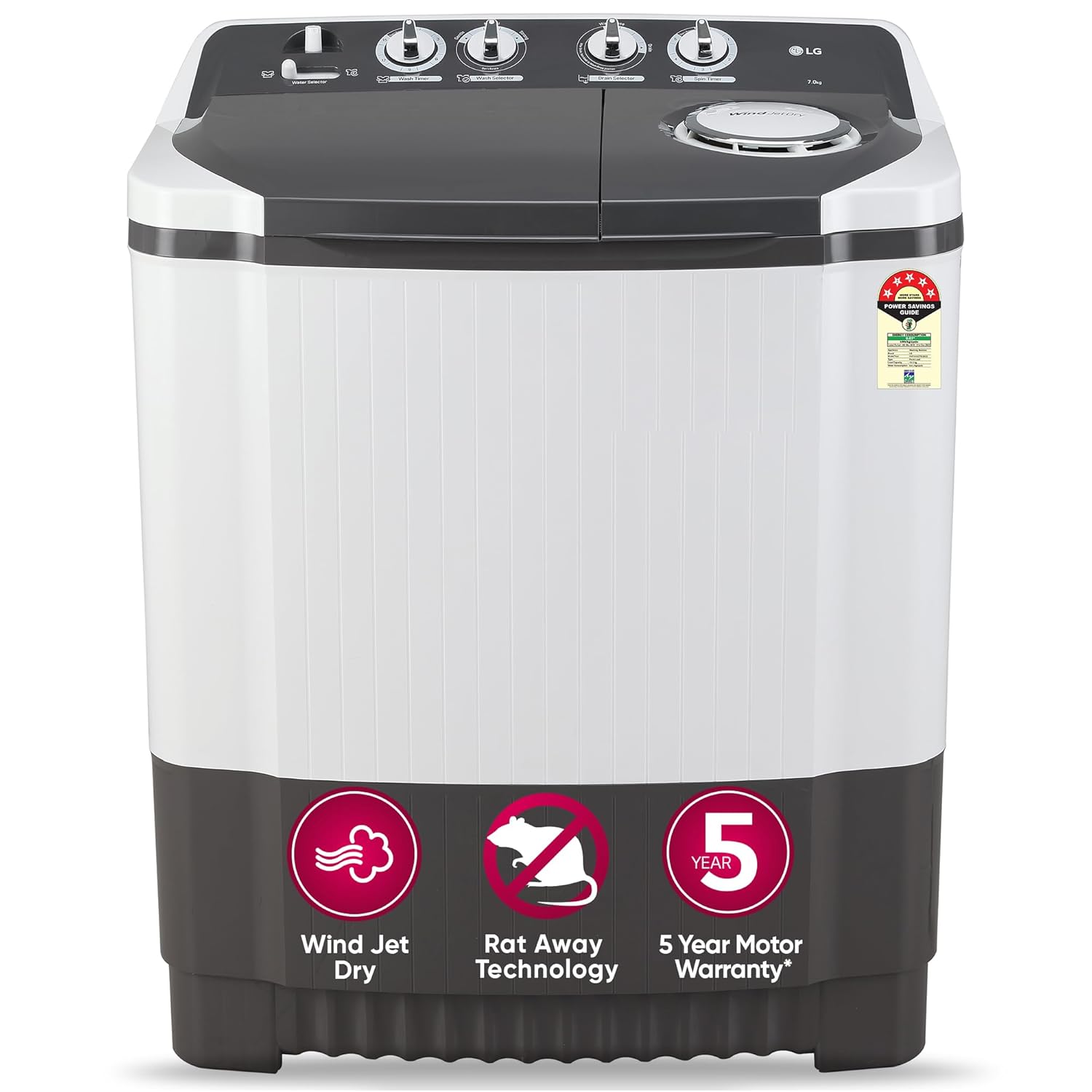
LG 7 Kg 5 Star Wind Jet Dry Semi-Automatic Top Load (P7020NGAZ)
Budget buyers wanting the most-reviewed washing machine we list
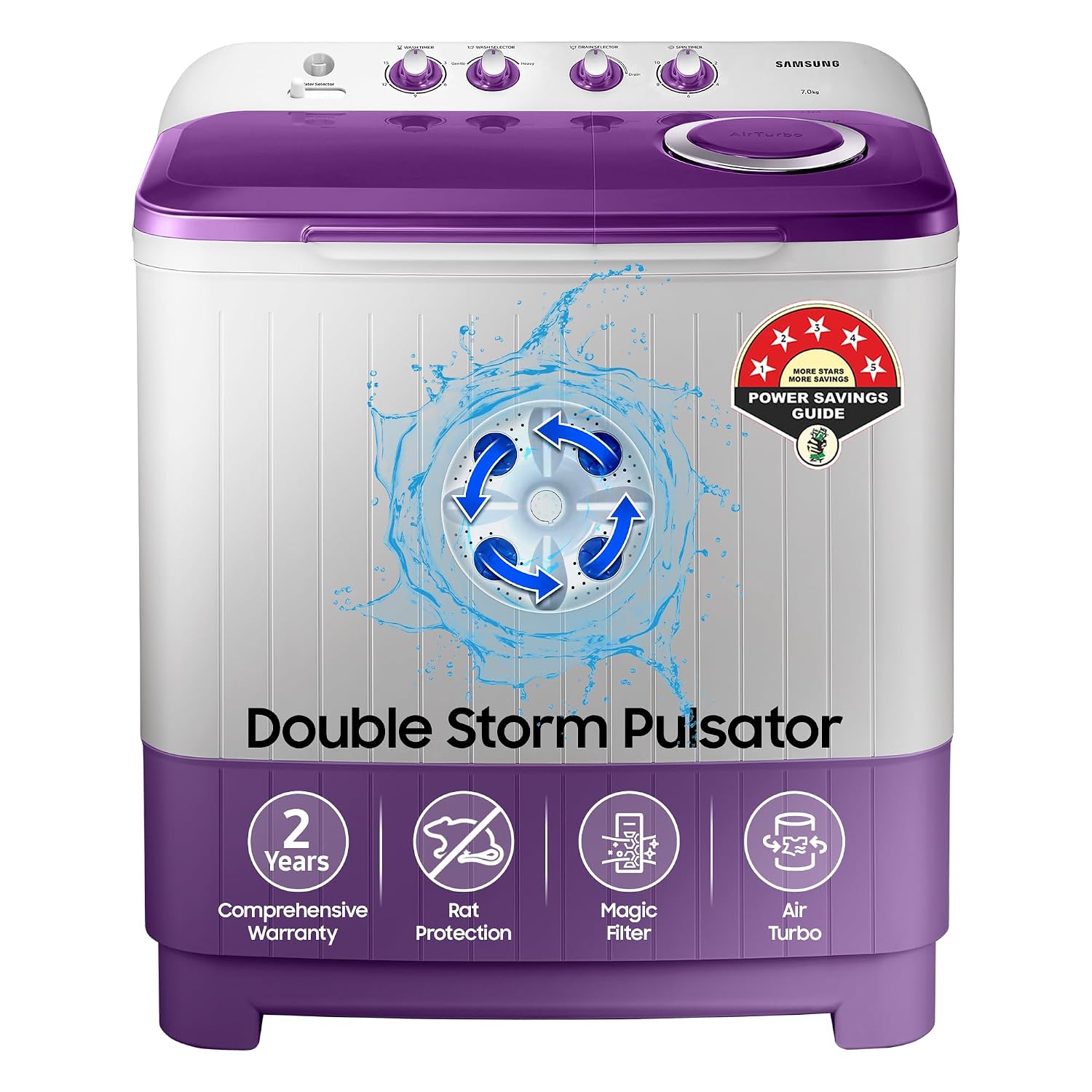
Samsung 7 Kg 5 Star Semi-Automatic Top Load (WT70M3000UU)
Budget buyers wanting a well-proven Samsung semi-automatic
Verdict: LG, the most-reviewed washing machine we list. The Samsung is about ₹1,000 cheaper and has caster wheels.
Big Semi-Automatic — Depends on Size
The LG 11 Kg (4.4★ from 1,514, about ₹18,700) is the largest semi-automatic we list; the Samsung 9.5 Kg (4.3★ from 2,575, about ₹15,800) costs about ₹2,900 less. Pick by how much you wash.
Fully Automatic Top Load, 7 Kg — Too Close to Call
| LG T70VBMB1Z | Samsung WA70BG4441 | |
|---|---|---|
| Rating | 4.2★ (3,005) | 4.1★ (5,968) |
| Bought in past month | 1,000+ | 1,000+ |
| Spin | 740 RPM | 700 RPM |
| Key tech | Smart Inverter, TurboDrum | Digital Inverter, Ecobubble |
| Price | About ₹20,000 | About ₹19,000 |
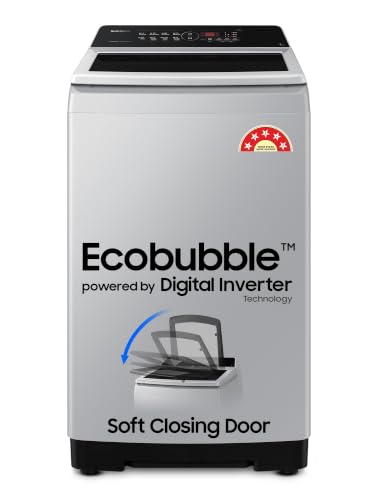
Samsung 7 Kg 5 Star Ecobubble Digital Inverter Fully Automatic Top Load (WA70BG4441)
Families of 3-4 wanting the most-reviewed top load
Verdict: a tie. LG is slightly higher rated and is our Best Overall; Samsung has twice the ratings and costs about ₹1,000 less.
Fully Automatic Top Load, 8 Kg — LG, Narrowly
The LG 8 Kg (T80VBMB4Z) is rated 4.2★ from 1,667 and sells 1,000+ a month, at about ₹22,000. Samsung's 8 Kg Ecobubble (4.0★ from 4,887, about ₹21,200) has more ratings, and its 8 Kg AI Wash adds Wi-Fi for about ₹22,400.
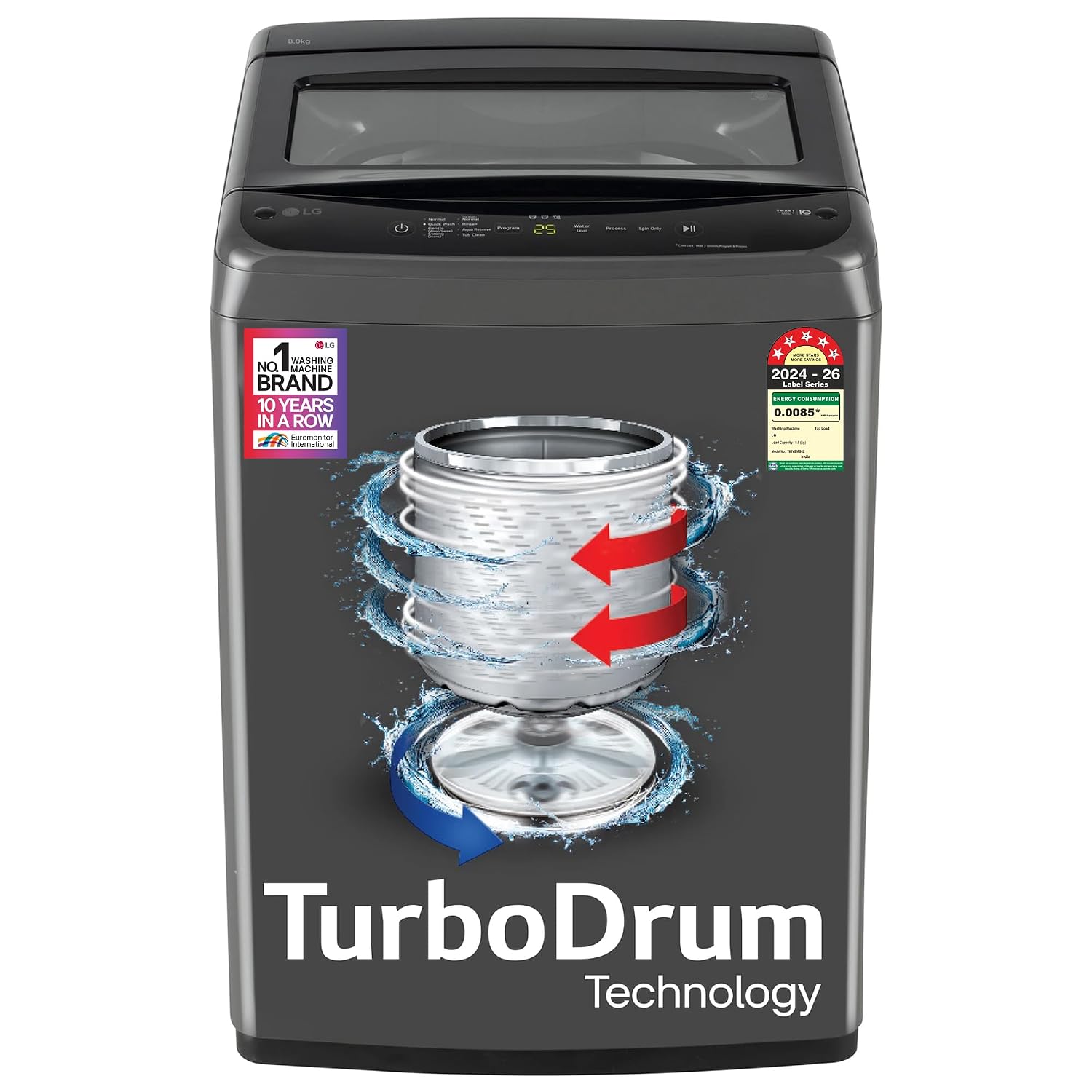
LG 8 Kg 5 Star Smart Inverter TurboDrum Fully Automatic Top Load (T80VBMB4Z)
Families of 4 wanting a best-selling 8 Kg top load
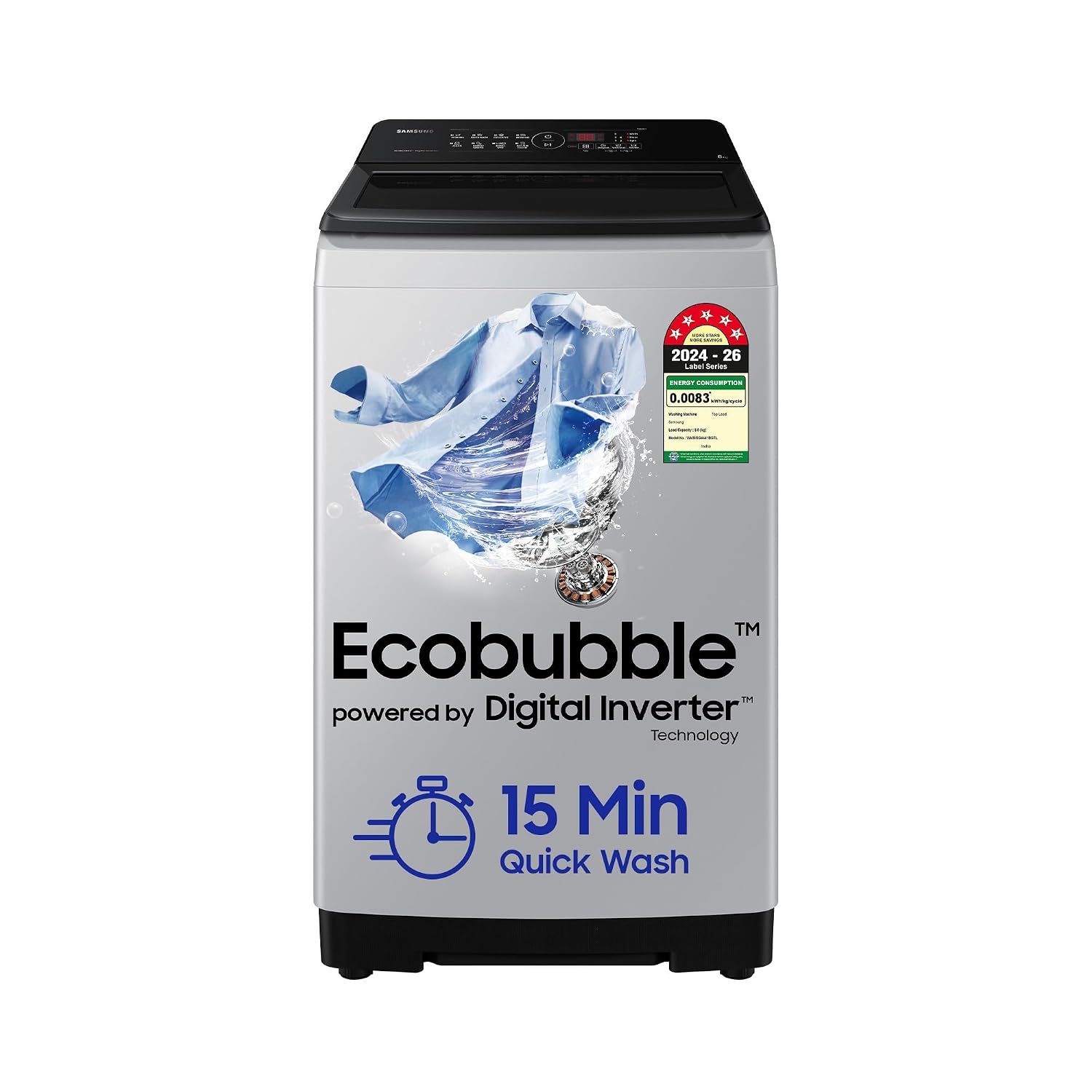
Samsung 8 Kg 5 Star Ecobubble Digital Inverter Fully Automatic Top Load (WA80BG4441BGTL)
Families of 4-5 wanting a well-proven 8 Kg top load
Front Load, 7-8 Kg — Depends on Priorities
| LG 7 Kg FHB1207Z2M | Samsung 8 Kg WW80T504DAX1TL | |
|---|---|---|
| Rating | 4.3★ (2,787) | 4.2★ (1,416) |
| Spin | 1200 RPM | 1400 RPM |
| Depth | 44cm | 55cm |
| Price | About ₹33,000 | About ₹35,800 |
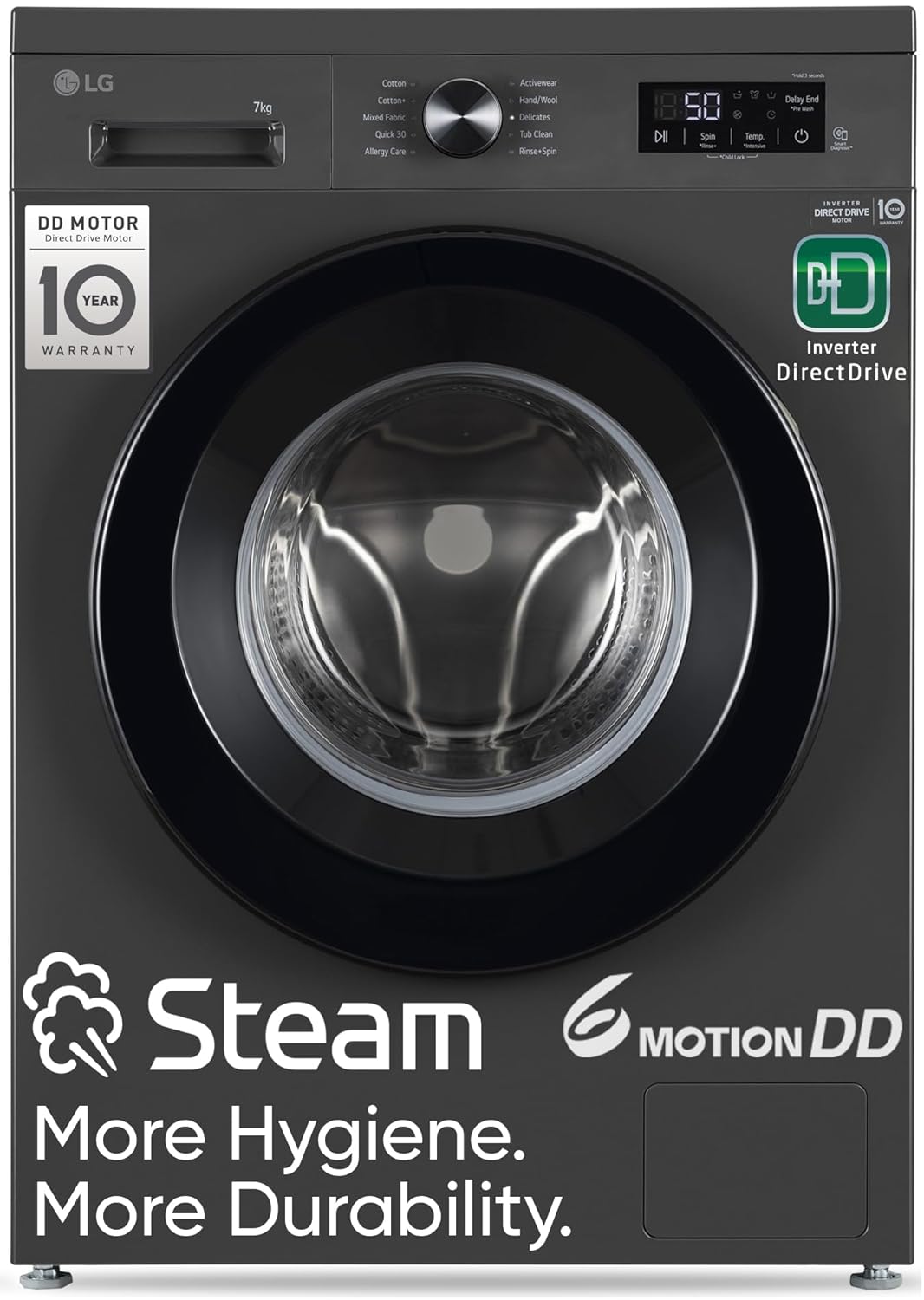
LG 7 Kg 5 Star Inverter Direct Drive Steam Front Load (FHB1207Z2M)
Families of 3 wanting a well-proven LG front load
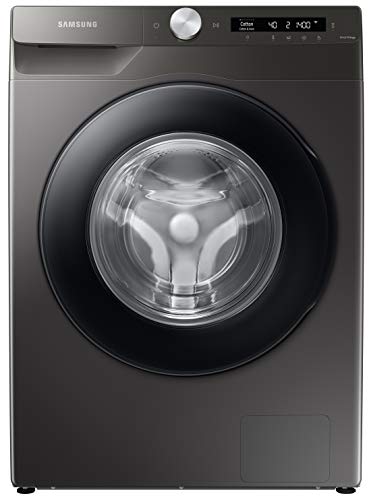
Samsung 8 Kg 5 Star AI Control Ecobubble Wi-Fi Front Load (WW80T504DAX1TL)
Families of 4 wanting a well-rated Samsung front load
The same LG 7 Kg also comes in Essence White (FHB1207Z2W, 4.2★ from 942): it is the best-selling front load we list (1,000+ a month) and costs about ₹27,500.
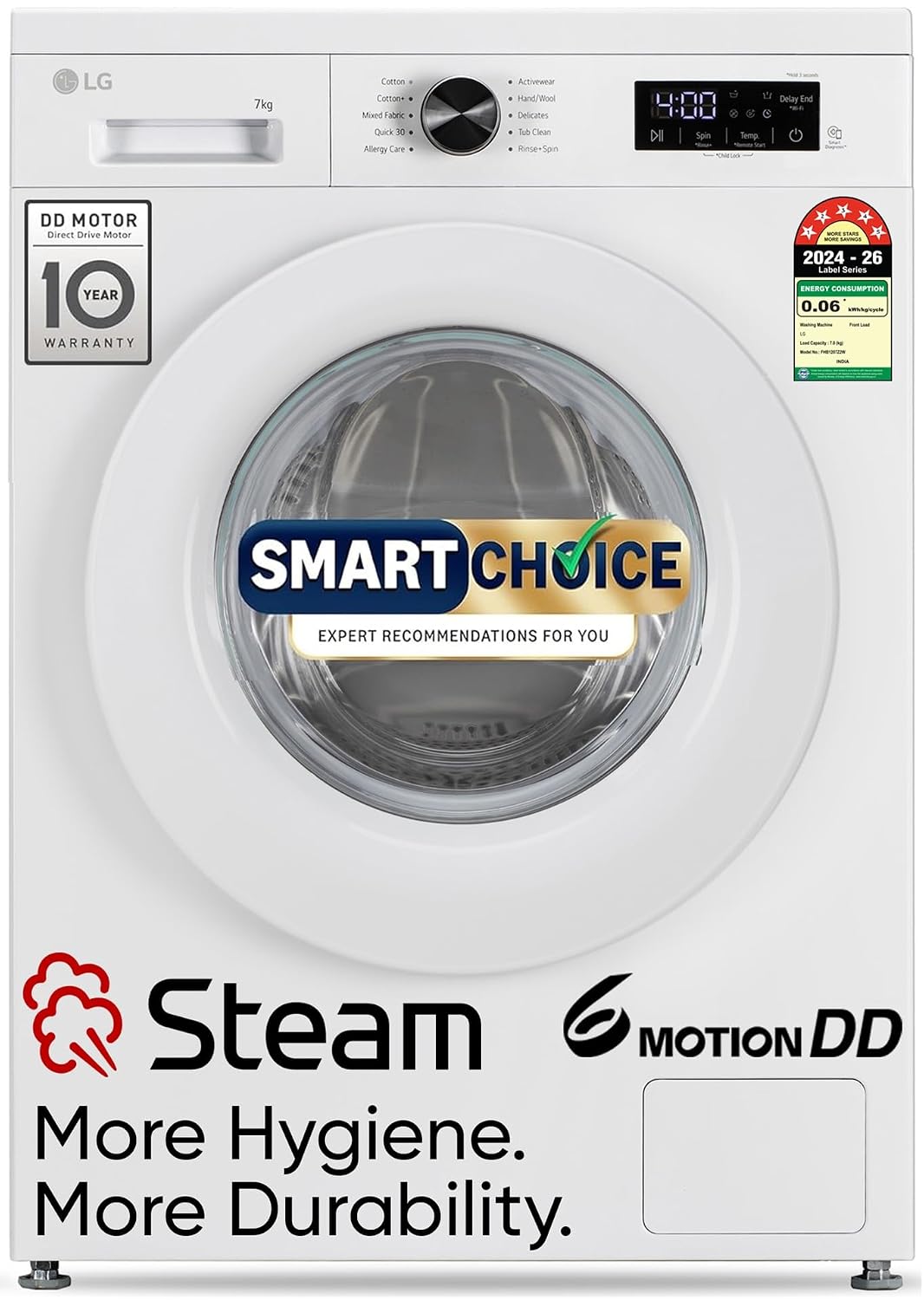
LG 7 Kg 5 Star Inverter Direct Drive Steam Front Load, Essence White (FHB1207Z2W)
Couples and families of 3 wanting a slim, best-selling front load for less
Verdict: LG for a slimmer machine, a lower price in white and a bigger review base; Samsung for an extra kilo and a faster spin.
Front Load, 9 Kg — Depends on Priorities
| LG 9 Kg FHP1209Z5M | Samsung 9 Kg WW90DG5U24AXTL | |
|---|---|---|
| Rating | 4.3★ (2,164) | 4.2★ (875) |
| Bought in past month | 900+ | 200+ |
| Spin | 1200 RPM | 1400 RPM |
| Water use | 7.4 L/kg (rated) | Not published |
| Extras | AI Direct Drive, steam, Wi-Fi | AI Ecobubble, Super Speed (39 min), steam, heater, Wi-Fi |
| Price | About ₹42,000 | About ₹41,200 |
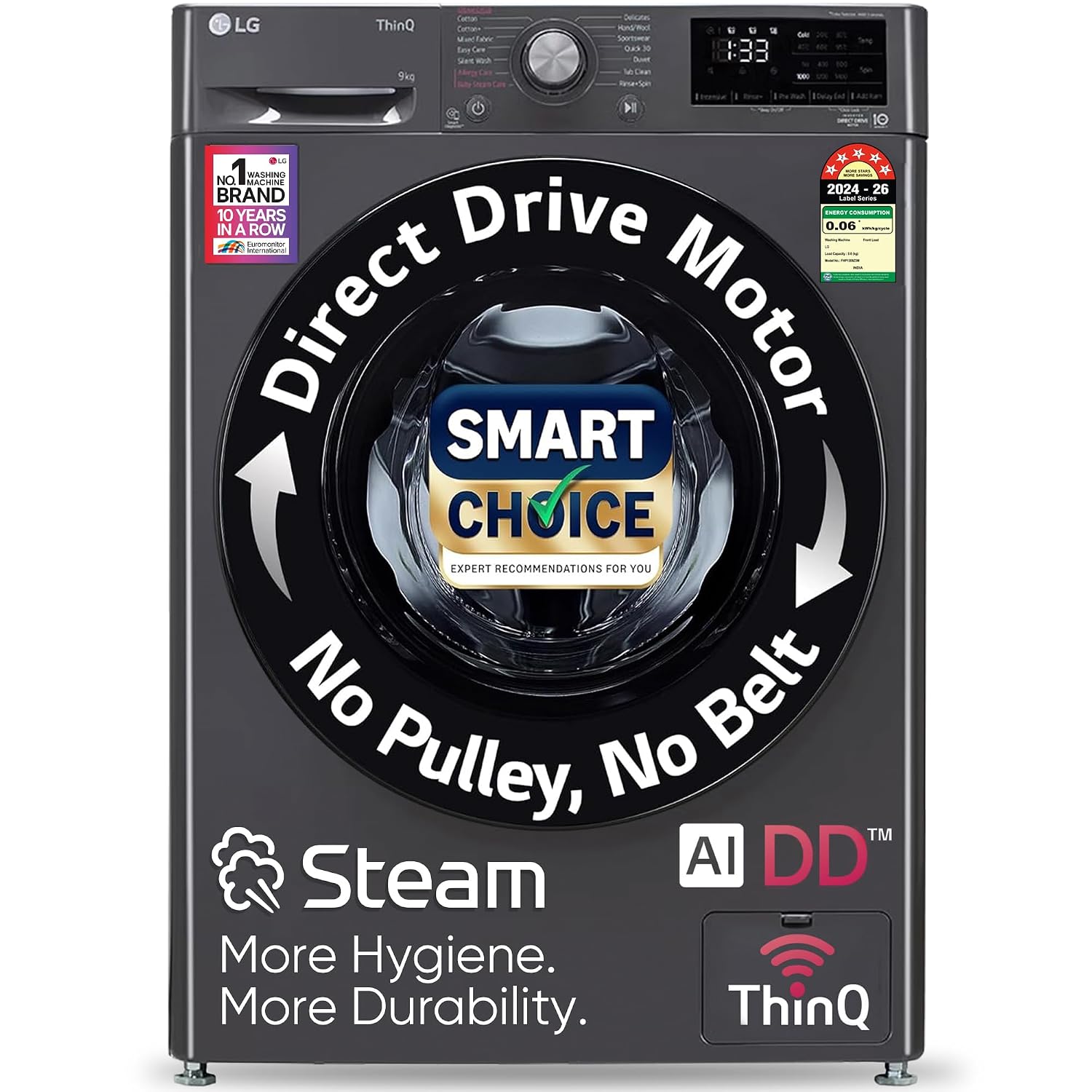
LG 9 Kg 5 Star AI Direct Drive Steam Wi-Fi Front Load (FHP1209Z5M)
Families of 4-5 wanting a best-selling 9 Kg front load with steam and Wi-Fi
Samsung 9 Kg 5 Star AI Ecobubble Super Speed Wi-Fi Front Load (WW90DG5U24AXTL)
Families of 4-5 wanting a premium front load with a heater and Wi-Fi
Verdict: LG is the best seller with the lower published water use; Samsung spins faster and has a 39-minute Super Speed cycle.
The Biggest Machines
Samsung's 12 Kg front load (4.3★) is the largest washing machine we list. LG's biggest fully automatic in our list is the 9 Kg top load (4.2★), at about ₹26,500.
The Final Verdict
| Type | Winner |
|---|---|
| 7 kg semi-automatic | LG |
| Big semi-automatic | Depends on size |
| 7 kg top load | Tie |
| 8 kg top load | LG (narrowly) |
| 7-8 kg front load | Depends on priorities |
| 9 kg front load | Depends on priorities |
| Largest capacity | Samsung (12 kg) |
Neither brand wins across the board. Decide the type and capacity first, then compare the two models at that size.
Frequently Asked Questions
Q1. Which is more reliable — LG or Samsung washing machine?
Both brands' models here have large, positive review bases, and both give 10 years on the motor for fully automatic machines. Compare the specific models' ratings rather than the brand.
Q2. Is LG or Samsung better for front-load washing machines?
LG's 7 Kg in white (FHB1207Z2W) is the best-selling front load we list, and LG's 7 Kg models are the slimmest (44cm deep). Samsung's front loads spin faster (1400 RPM) and go up to 12 kg.
Q3. Does EcoBubble really work?
Samsung's Ecobubble dissolves detergent into foam before it reaches the clothes, which helps in cold-water washes. Samsung's top loads with it are among the most-reviewed machines we list.
Q4. Which is better for washing sarees?
Any front load with a delicate or wool program is gentlest; on a top load, use a mesh laundry bag and the delicate program.
Q5. What is the typical price difference?
At matched sizes they are usually within ₹1,000–₹3,000 of each other; check the live prices above.
Related Reading
- Best Washing Machine in India 2026 — All models with live prices
- Best Washing Machine Under ₹20,000 — Budget picks
- Front Load vs Top Load Washing Machine — Which type suits you
- Whirlpool vs Samsung Washing Machine India — Another Samsung matchup