Disclosure: This post contains affiliate links. If you buy through our links, we earn a small commission at no extra cost to you. Read our affiliate policy.
Every water purifier ad in India pushes RO as the default answer. It isn't. RO solves a specific problem — dissolved salts (TDS) in borewell, tanker, or hard water — and it solves that problem by wasting 50–70% of the water that goes in and stripping out minerals along with the contaminants. If your water source doesn't actually have a TDS problem, RO is the most expensive, most wasteful purifier you could buy.
This guide explains what RO, UV, and gravity/UF purifiers each actually do, so you can match the technology to your water source instead of the marketing.
The Honest Answer First
| Your Water Source | TDS Level | What You Need | Why |
|---|---|---|---|
| Borewell, tanker, or known hard water | Above 200–300 ppm | RO (+ UV/UF as a booster) | Only RO removes dissolved salts, fluoride, arsenic, heavy metals |
| Municipal supply, tested/known good quality | Below 200 ppm | UV + UF (no RO) | Kills bacteria/viruses, filters particulates — no water wasted, minerals retained |
| Municipal supply, generally trusted, budget priority | Below 200 ppm | Gravity / non-electric UF | No electricity, no wastage, no running cost — but no virus protection |
| Any source, but you don't know your TDS | Unknown | Test it first | Buying RO for good water — or gravity for hard water — are the two most expensive mistakes in this category |
If you take one thing from this guide: check your TDS before you buy, not after. A ₹200 digital TDS meter (widely sold on Amazon) or a report from your municipal water board tells you which of the three purification types below you actually need.
RO (Reverse Osmosis) — For Hard Water and Dissolved Solids
How RO works
Water is forced through a semi-permeable membrane with pores fine enough to block dissolved salts, heavy metals, fluoride, and most dissolved impurities — not just suspended particles. This is the only one of the three technologies that reduces TDS (total dissolved solids).
What RO handles well
- ✅ High-TDS borewell or tanker water (200 ppm and above)
- ✅ Dissolved heavy metals — arsenic, lead, fluoride
- ✅ Hard water with limescale-forming salts
- ✅ Brackish or salty groundwater
RO's real trade-offs
- ⚠️ Wastes 50–70% of input water as reject — for every litre of purified water, 2–3 litres go down the drain. Some newer models claim "up to 60% higher recovery," which is real but still far from zero waste.
- ⚠️ Strips beneficial minerals along with contaminants — most RO purifiers add a mineraliser cartridge afterward specifically to compensate for this.
- ⚠️ Needs electricity to run the pump that forces water through the membrane.
- ⚠️ Membrane replacement cost — typically every 12–18 months, a recurring expense beyond the purchase price.
Real RO options at different price points
Pureplus Zinc Copper Alkaline RO (12L) — the standout value pick: a genuinely massive 9,500+ review base at 4.6★, with zinc/copper mineral enhancement usually reserved for ₹15,000+ models, at a fraction of the price.
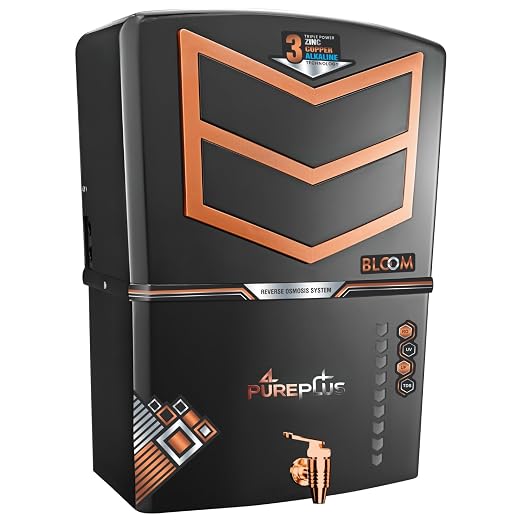
Pureplus Zinc Copper Alkaline Hydrogen RO Water Purifier (12L)
✅ Buyers wanting mineral-enhanced RO water at the lowest price with a genuinely massive review base
KENT Grand RO — the established-brand pick, backed by KENT's service network (the widest RO-specific service reach we track), with in-tank UV LED as an added safety layer.
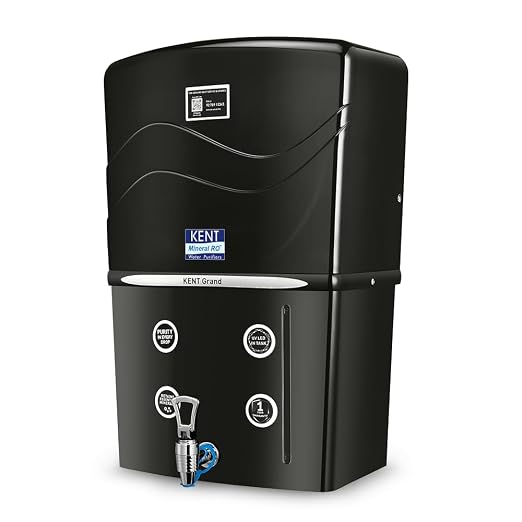
KENT Grand RO Water Purifier (RO+UF+TDS Control+UV LED Tank)
✅ Buyers wanting the most trusted RO brand name in India with the strongest rating-to-review balance
UV (Ultraviolet) + UF — For Already-Decent Municipal Water
How UV + UF works
UV light neutralises the DNA of bacteria and viruses as water passes through a UV chamber, so they can't reproduce — it kills biological contaminants but does nothing to dissolved salts. UF (ultrafiltration) is a membrane stage that physically filters out suspended particles, cysts, and some bacteria, without the fine pore size of an RO membrane. Combined, UV+UF handles biological safety and particulate filtration — but not TDS.
What UV + UF handles well
- ✅ Bacteria, viruses, and other microorganisms
- ✅ Suspended solids, sediment, and turbidity
- ✅ Zero water wastage — unlike RO, there's no reject stream
- ✅ Retains natural minerals since nothing is stripped
The real trade-off
- ❌ Does nothing for TDS. If your source water has high dissolved salts, UV+UF purifies it biologically but leaves the salts, fluoride, and heavy metals untouched. This is the single most common purchase mistake in this category — buying a UV+UF purifier for genuinely hard borewell water.
- ⚠️ Needs electricity for the UV lamp.
- ⚠️ UV lamps have a service life (typically 1 year) and need replacement to stay effective — an invisible failure mode, since the water still looks and tastes normal after the lamp dies.
Real UV+UF option (non-RO)
AO Smith X2 — the clearest example of this category on the market: explicitly built without an RO membrane, for municipal water with TDS already below 200. It retains natural minerals RO would otherwise strip out, at zero water wastage.
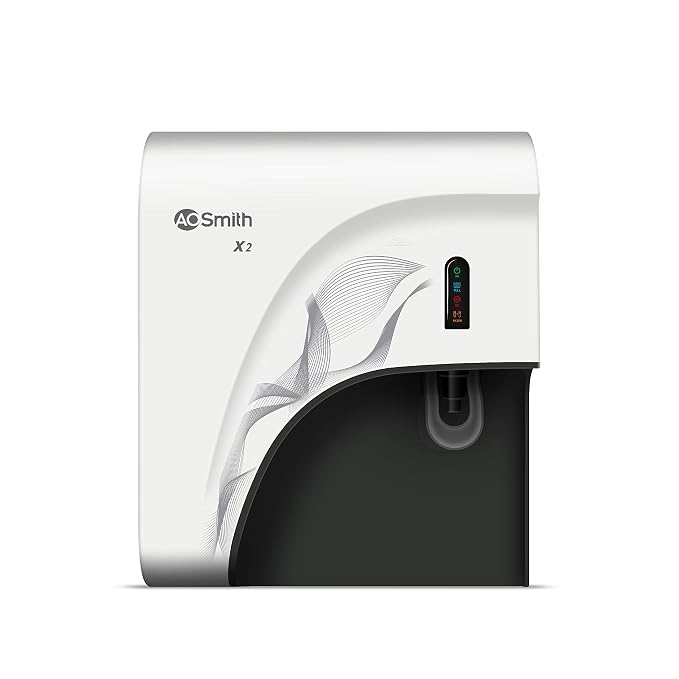
AO Smith X2 UV + UF Water Purifier (Non-RO, Municipal Water)
✅ Households on good municipal water (TDS below 200) who don't need RO and want to retain natural minerals
This is not the right purifier for borewell or tanker water — the brand's own spec sheet says so directly.
Gravity / Non-Electric UF — Zero Running Cost, No Electricity
How gravity/non-electric works
Water passes through an activated carbon and/or UF membrane using gravity alone — no pump, no electricity, no UV lamp. It filters out chlorine, odour, sediment, and some bacteria, but has no active mechanism against viruses and no TDS reduction.
What gravity purifiers handle well
- ✅ Chlorine taste and odour removal
- ✅ Sediment and visible particulate filtering
- ✅ Some bacterial reduction (UF-based models)
- ✅ Works during power cuts — genuinely useful in areas with unreliable electricity
- ✅ Zero electricity cost, zero water wastage
- ✅ Lowest upfront price of the three technologies
Gravity's real trade-offs
- ❌ No dissolved-salt (TDS) reduction — unsuitable for hard or borewell water
- ❌ Weaker protection against viruses than UV-based purification
- ⚠️ Requires manual refilling of the top chamber
- ⚠️ Filter cartridges still need periodic replacement to stay effective
Real gravity options
KENT Gold Optima — a genuinely non-electric UF purifier with no installation or plumbing required, at the lowest price point in the category. Explicitly positioned by KENT for municipal water only — not for borewell or high-TDS sources.
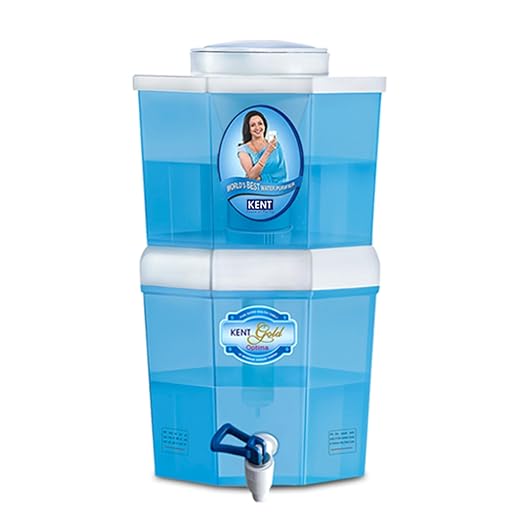
KENT Gold Optima Gravity Water Purifier (Non-Electric, UF Technology)
✅ Budget buyers with good municipal water quality who don't need RO or electricity
Pureit Classic 23L — the largest-capacity gravity option we track, using activated carbon filtration with HUL's "germ kill" technology, no electricity required.
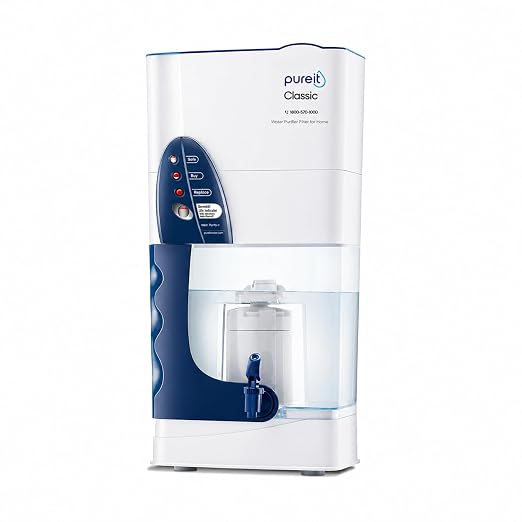
Pureit Classic 23L Gravity Based Water Purifier
✅ Budget buyers wanting a better-rated non-electric alternative to the cheapest gravity option
How to Check Your Actual Water Source
Before choosing between these three, spend five minutes confirming what you're actually dealing with:
- Digital TDS meter — a ₹150–300 pen-style meter (widely available on Amazon) gives an instant reading. Above 200 ppm generally means RO is worth the wastage; below that, RO is arguably overkill.
- Municipal water board report — most city water boards publish periodic quality reports online; if your building runs on municipal supply (not a private borewell), this is the most reliable source.
- Ask your building/society — in apartments, find out whether the supply is straight municipal, a borewell blend, or tanker-topped-up — mixed sources are common in many Indian cities and can push TDS above municipal averages even when the building is technically on the city line.
- When in doubt, treat borewell and tanker water as high-TDS by default — testing is cheap, RO membranes and reject water are not.
📊 RO vs UV vs Gravity — Complete Comparison
| RO | UV + UF | Gravity / Non-Electric | |
|---|---|---|---|
| Removes dissolved salts (TDS) | ✅ Yes | ❌ No | ❌ No |
| Kills bacteria & viruses | ✅ Yes (with UV add-on) | ✅ Yes | ⚠️ Partial (UF only) |
| Removes heavy metals/fluoride | ✅ Yes | ❌ No | ❌ No |
| Water wastage | ⚠️ 50–70% reject | ✅ None | ✅ None |
| Retains natural minerals | ❌ Stripped (needs re-mineraliser) | ✅ Retained | ✅ Retained |
| Needs electricity | ✅ Yes | ✅ Yes | ❌ No |
| Works in power cuts | ❌ No | ❌ No | ✅ Yes |
| Best suited for | Borewell, tanker, hard water | Good municipal supply | Good municipal supply, budget priority |
| Typical price range (this catalog) | ₹5,500–25,000 | ₹9,500 | ₹1,900–3,300 |
The Two Most Common Mistakes
Buying RO for water that doesn't need it. If your municipal supply already tests below 200 ppm TDS, an RO purifier wastes water and money — you're paying to strip out minerals your body needs, then paying again for a mineraliser cartridge to add some of them back.
Buying UV or gravity for genuinely hard water. If your source is borewell, tanker-fed, or tests above 300 ppm TDS, a UV or gravity purifier will make the water biologically safer but won't touch the dissolved salts — you'll still be drinking hard, high-TDS water, just without the bacteria.
❓ Frequently Asked Questions
Is RO always better than UV? No — "better" depends entirely on your water source. RO is the only technology that reduces TDS, but that capability is wasted (literally — as reject water) if your source doesn't have a TDS problem in the first place.
Can I use a UV purifier for borewell water? Not safely as your only line of defence. UV kills biological contaminants but does nothing for dissolved salts, fluoride, or heavy metals commonly found in borewell water. Use RO, or RO+UV combined, for borewell sources.
Is a non-electric gravity purifier safe? For municipal water that's already treated, yes — gravity/UF purifiers handle chlorine, sediment, and much bacterial contamination effectively. They're not designed for genuinely contaminated or high-TDS sources.
How do I know if my water has high TDS? A ₹150–300 digital TDS meter gives an instant reading, or check your municipal water board's published quality reports if you're on city supply. Don't guess — the wrong purifier type either wastes money (RO on good water) or leaves you under-protected (gravity/UV on hard water).
Do RO purifiers remove too many minerals? Yes, RO strips both harmful dissolved solids and beneficial minerals indiscriminately — which is why most modern RO purifiers include a mineraliser or alkaline cartridge afterward to add some minerals back.
All specs and prices verified against Amazon India listings and brand spec sheets as of September 2026.
📚 Related Reading
- Best Water Purifiers in India 2026 — All Models — All models we track, with live prices
- Best Water Purifier Under ₹10,000 — Budget-focused picks by type
- Aquaguard vs KENT Water Purifier India — The two biggest RO brand names compared
- Pureplus vs Aquaguard Water Purifier India — Value challenger vs established brand