Disclosure: This post contains affiliate links. If you buy through our links, we earn a small commission at no extra cost to you. Read our affiliate policy.
Wet grinding is the hardest test for any mixer grinder in India. Grinding 500g of soaked urad dal and rice into smooth, aerated dosa batter requires sustained motor load for 15–25 minutes — far longer than blending lassi or grinding dry spices.
Most mixer grinders marketed as "750W" or "900W" will handle this job. But how many can do it daily for 5 years without the motor burning out? That's the real question this guide answers.
Why Wet Grinding Is the Ultimate Mixer Grinder Test
When you soak rice and dal for dosa batter, then grind them with water, you create a thick paste that resists the blade rotation. The motor works at peak load for 15–25 minutes continuously.
Compare this to:
- Chopping onions: 30 seconds of load
- Making chutney: 2–3 minutes of load
- Grinding coffee: 1 minute of load
Wet grinding (15–25 minutes daily) is 10x harder on a motor than any other Indian kitchen task. A mixer grinder that seems fine for chutneys can have its motor life cut by 50–70% from daily dosa batter grinding.
The 3 Factors That Determine Wet Grinding Performance
1. Motor Quality (Not Just Wattage)
The motor's copper winding quality determines heat resistance under sustained load. Better copper = less heat buildup = longer motor life. Premium Indian brands (Sujata, Bosch) use higher-grade copper winding. Budget mixers use aluminium winding that heats faster.
2. Jar Design — Flow Breakers
The best wet grinding jars have flow breakers — ridges on the inner jar wall that interrupt the circular flow of batter. Without flow breakers, batter spins with the blade in a circle without getting shredded. With flow breakers, the batter is constantly redirected into the blade — grinding is faster and more thorough.
3. Blade Geometry
Wet grinding blades have a different geometry than dry grinding blades. The wet grinding blade has a wider sweep and creates more turbulence in liquid mixtures. Some premium mixers include a dedicated wet grinding jar with appropriate blade — others use the same blade for everything, reducing efficiency.
🏆 Best Mixer Grinders for Wet Grinding — Ranked
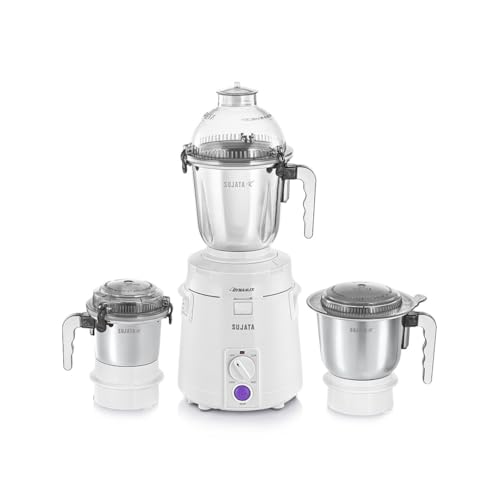
🥇 Best Overall: Sujata Dynamix 900W
Sujata's reputation for wet grinding is built on 40+ years of South Indian household use. The Dynamix 900W is their flagship with the most honest motor rating — 900W under actual grinding load, not just at no-load. The jars have excellent flow breakers. The blade assembly is robust. The gasket quality prevents leakage even after daily wet grinding.
For households that grind dosa batter 3–5 times a week, the Sujata Dynamix is the most reliable long-term investment in its price segment.
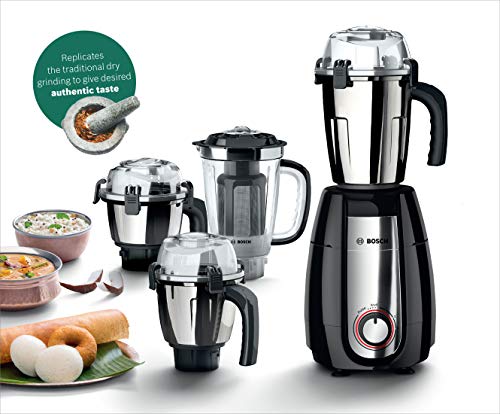
🥈 Best Premium: Bosch TrueMixx Pro 1000W
Bosch's TrueMixx Pro is our top pick for households that take wet grinding seriously. The 1000W European motor runs at genuine rated wattage under full load. The ProBlend6 jar is specifically designed for wet grinding — the flow breaker geometry is optimised through Bosch's engineering testing. The 5-year comprehensive warranty means you're protected even if daily wet grinding stresses the motor.
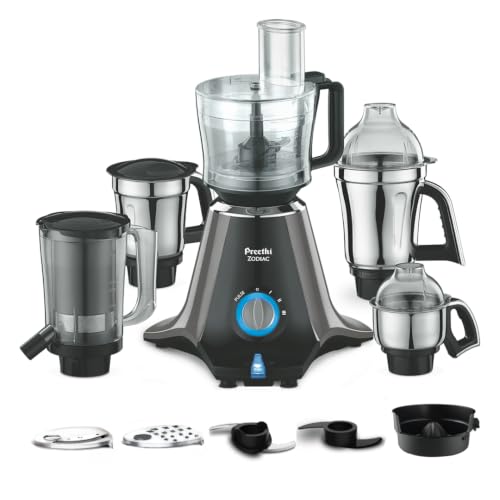
🥉 Best Mid-Range: Preethi Zodiac MG-218 750W
Preethi's Zodiac is the most popular mixer grinder in South India for a reason. The 750W motor handles dosa batter reliably for most households (up to 750g soaked ingredients). The Nutri-Pro jar design improves batter consistency. Philips service network backing means repairs are available anywhere in India.
For families that grind batter 1–2 times per week, the Preethi Zodiac handles the load well at a lower price than Sujata or Bosch.
Best for Coconut Chutney: Butterfly Jet Elite 750W
Butterfly is particularly well-regarded in Tamil Nadu and Kerala for coconut processing. The Butterfly Jet Elite's small jar with its blade geometry creates exceptional fine grinding for coconut — fresh coconut chutney, coconut milk paste, and coconut-based gravies reach a fineness that larger jars can't match.
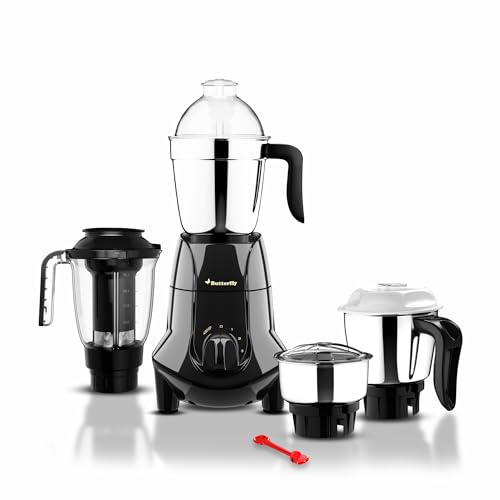
Butterfly Jet Elite 750W
✅ South Indian families who make idli/dosa batter and coconut-based dishes daily
📊 Wet Grinding Performance Comparison
| Model | Motor | Sustained Load | Batter Smoothness | Price |
|---|---|---|---|---|
| Sujata Dynamix 900W | 900W genuine | Excellent (25+ min) | Very smooth | Check Link |
| Bosch TrueMixx Pro 1000W | 1000W genuine | Outstanding | Extremely smooth | Check Link |
| Preethi Zodiac 750W | 750W | Good (15–20 min) | Smooth | Check Link |
| Butterfly Jet Elite 750W | 750W | Good | Smooth | Check Link |
Wet Grinding Tips for Indian Kitchens
1. Always soak ingredients adequately Urad dal for idli: 4–6 hours. Rice for dosa: 4–6 hours. Insufficient soaking forces the motor to work harder and generate more heat.
2. Grind in batches For 500g+ of batter, grind in 2–3 batches of 5–7 minutes each with 2-minute breaks. Continuous grinding for 20+ minutes without breaks stresses even the best motors.
3. Add water gradually Start with minimal water, add gradually as the batter thickens. Starting with too much water creates a sloshing liquid that doesn't grind properly.
4. Use the multipurpose jar, not the liquidising jar The 1L multipurpose jar with flow breakers is designed for wet grinding. The 1.5L liquidising jar is for liquids — it's too wide for effective batter grinding.
5. Clean immediately after use Dried dosa batter is extremely hard to clean. Fill the jar with warm water + 1 drop soap → run for 10 seconds → rinse. Takes 30 seconds. Waiting until the next day means scrubbing for 5 minutes.
Wet Grinding Tips for Perfect Idli Batter
Idli batter is more demanding than dosa batter because idlis require a highly aerated, fermented batter to achieve their characteristic soft, spongy texture. The grinding stage is critical.
Soaking Time
- Urad dal (split black gram): Soak for 6–8 hours (or overnight). Undersoaked dal produces dense, chewy idlis. The dal should be visibly swollen and soft before grinding.
- Idli rice (parboiled rice): Soak for 4–6 hours. Regular raw rice can be soaked for 2–3 hours, but parboiled rice needs longer.
- Fenugreek seeds (methi): Add 1 teaspoon to the urad dal while soaking. Fenugreek aids fermentation and gives idlis their slight tang.
Water Temperature
This is where most people go wrong. Use cold water — preferably refrigerator-cold water — when grinding. Cold water prevents the motor's heat from warming the batter during grinding. Warm batter ferments unevenly and can over-ferment, producing overly sour idlis. Some households in Chennai and Bengaluru add ice cubes directly to the batter during grinding on hot days.
Water Ratio
For 2 cups urad dal: add water very gradually. Start with ¼ cup, let the grinder incorporate it, then add more in small additions. The final batter should be thick and fluffy — it should fall from a spoon in a thick ribbon, not run like a liquid. Over-watering during grinding produces flat, dense idlis.
Grinding Sequence
Always grind urad dal first, separately, before adding rice. Urad dal needs 15–20 minutes of dedicated grinding to become light, airy, and white. This aeration is what makes idlis spongy. Then grind the soaked rice separately to a slightly coarser consistency and mix both batters together by hand (not in the mixer — you want to preserve the air incorporated during grinding).
How Long Should You Grind Dosa Batter?
The most common mistake with dosa batter in a mixer grinder is either under-grinding (coarse batter) or over-grinding (batter heats up, kills fermentation). Here's a practical timing guide:
For 750W Mixer Grinder (2–4 servings)
| Phase | Duration | What to Look For |
|---|---|---|
| Urad dal grinding (first batch) | 5–7 min | Batter turns white, thick, airy |
| 2-minute rest | 2 min | Let motor cool |
| Urad dal grinding (second batch) | 5–7 min | Smooth, no visible granules |
| Rice grinding | 5–8 min | Slightly grainy texture is fine |
| Total active grinding time | 15–22 min | Smooth, spreadable consistency |
For 900W+ Mixer Grinder (4–6 servings)
| Phase | Duration | What to Look For |
|---|---|---|
| Urad dal grinding | 8–10 min (one batch) | White, fluffy, airy |
| 2-minute rest | 2 min | Mandatory even with 900W |
| Rice grinding | 6–8 min | Semi-smooth |
| Total active grinding time | 16–20 min | Ready for fermentation |
Signs the batter is ready:
- Urad dal batter: white, thick, and when you drop a small ball into water, it floats
- Rice batter: no visible rice granules when rubbed between fingers
- Combined batter: flows slowly from a ladle, not watery
Signs of over-grinding:
- Batter feels warm (above body temperature)
- Batter turns slightly grey or off-white
- Idlis from over-ground batter are flat and slightly gummy
What Causes Grainy Idli Batter — And How to Fix It
Grainy idli batter is one of the most common complaints from households that have switched from a traditional wet grinder to a mixer grinder. Here's a systematic diagnosis:
Cause 1: Insufficient Soaking
Symptom: Batter is grainy despite long grinding. Urad dal visible as small specks. Fix: Extend soaking time. If dal isn't softened enough to press flat between fingers, it needs more soaking. In winter, soak urad dal for up to 10–12 hours.
Cause 2: Motor Overheating Mid-Grind
Symptom: Grinding was fine for 5 minutes, then the batter becomes progressively coarser as the motor slows under heat. Fix: Grind in shorter batches — never more than 5 minutes per batch for budget mixers. Add cold water between batches to bring batter temperature down.
Cause 3: Wrong Jar
Symptom: Batter is grainy despite adequate soaking and grinding time. Fix: Switch to the multipurpose 1L jar with flow breakers, not the large liquidising jar. The wide liquidising jar creates a vortex that doesn't pull batter into the blade effectively for wet grinding.
Cause 4: Too Much Batter for the Jar Capacity
Symptom: Bottom of jar grinds fine but top portion stays coarse. Fix: Fill the jar to no more than 60% capacity. For a 1L jar, that's 600ml of batter. Grind in two batches instead of one.
Cause 5: Underpowered Motor
Symptom: Even with correct technique, batter never gets smooth. Fix: If your mixer is below 750W, it may simply not have enough power for proper wet grinding. Upgrade to a 750W minimum. For very smooth idli batter, 900W motors like the Sujata Dynamix produce noticeably better results.
❓ Frequently Asked Questions
Which mixer grinder is best for dosa batter in India? The Sujata Dynamix 900W — purpose-built for sustained wet grinding with genuine 900W motor power and excellent flow-breaker jar design. For a premium option, the Bosch TrueMixx Pro 1000W delivers even smoother results with its ProBlend6 jar geometry.
Can a 500W mixer grinder make dosa batter? Technically yes, but not well. 500W motors overheat during the 15–25 minute wet grinding cycle and produce inconsistently smooth batter. 750W minimum for dosa batter. If you grind batter more than twice a week, invest in 900W.
How long should I grind dosa batter in a mixer grinder? Total grinding time: 15–25 minutes, but in batches of 5–7 minutes with 2-minute breaks. For idli batter (urad dal ground separately): 20–30 minutes total in batches. Urad dal should always be ground first to achieve maximum aeration.
Mixer grinder vs wet grinder — which is better for dosa batter? A dedicated wet grinder (table-top stone grinder) produces more authentic, aerated batter — the stone grinding creates more cell aeration, which gives idlis their characteristic sponginess. A mixer grinder produces good batter but not quite as aerated. For daily use by 2–4 people, a mixer grinder is sufficient. For households making batter every day for 6+ people, a wet grinder is worth the investment.
Why are my idlis coming out flat even with a good mixer grinder? Flat idlis from a mixer grinder are almost always caused by one of three issues: (1) over-ground batter that warmed up during grinding — killing yeast activity and reducing fermentation; (2) insufficient urad dal aeration from grinding too quickly; or (3) too much water added during grinding. Follow the cold-water technique and grind urad dal in longer, dedicated batches to restore idli texture.
All prices verified on Amazon India as of July 2026. See our complete mixer grinder guide for all models.
- Best Mixer Grinder in India 2026 — Top 5 picks, all 13 models compared