Disclosure: This post contains affiliate links. If you buy through our links, we earn a small commission at no extra cost to you. Read our affiliate policy.
Here's an ironic truth about dishwashers: the machine you use to clean your dishes can itself become dirty, smelly, and clogged — sometimes within just a few months of use.
This is especially true in India, where:
- Hard water leaves mineral deposits on the spray arms and interior walls
- Oily, spiced Indian food residue is heavier than typical Western food residue
- Many users forget to regularly clean the filter (the most important maintenance task)
This guide will walk you through the complete maintenance routine to keep your dishwasher spotlessly clean and running efficiently.
Monthly Maintenance Tasks
1. Clean the Filter (Most Critical Step)
Almost every modern dishwasher has a removable filter at the bottom of the machine. This filter catches all the food particles that wash off your dishes so they don't clog the drain. If you don't clean this regularly, the trapped food rots and causes the horrible "fishy" or "drain-like" smell that many users complain about.
How to do it:
- Twist and lift out the filter (most models have a two-part filter — a coarse mesh and a micro-filter below)
- Rinse it under running tap water
- Use an old toothbrush to scrub away any stuck-on residue
- For heavy buildup, soak it in warm water with a spoon of dishwashing liquid for 15 minutes
- Reassemble and put it back
How often: Every 2-4 weeks. If you run the dishwasher daily and cook heavy Indian food, clean the filter every 2 weeks.
2. Wipe Down the Door Seal
The rubber gasket around the door is a trap for food debris and moisture, and it's a common source of mold and bad smells.
How to do it:
- Dampen a cloth with white vinegar or a mild multi-surface cleaner
- Wipe along the fold of the rubber seal carefully, getting into the grooves
- Dry it off with a clean cloth
3. Check and Clean the Spray Arms
The spray arms (typically one at the bottom and one under the top rack) have small holes that spray water onto your dishes. These holes can get clogged with limescale from hard water or food particles.
How to check: Look at the holes in the spray arm. Are any of them blocked?
How to clean: Most spray arms can be unscrewed or unclipped and removed. Soak them in white vinegar for 30 minutes, then use a toothpick or thin wire to clear each hole.
The Monthly Deep Clean Cycle
Once a month, run a deep clean cycle with no dishes:
Step 1: Place a dishwasher-safe bowl or cup filled with 250ml of white vinegar on the top rack. Run a Hot cycle (or Intensive if available). The vinegar will dissolve limescale deposits inside the machine.
Step 2: After that cycle finishes, sprinkle 1 cup of baking soda along the bottom of the dishwasher and run a Short cycle. The baking soda deodorizes the machine and removes staining.
Alternatively: Use a commercial dishwasher cleaner tablet (like Finish Dishwasher Cleaner). These are specifically formulated and are more effective than the vinegar method for heavily scaled machines.
Solving the Biggest Indian Dishwasher Problems
Problem 1: White Film / Chalky Residue on Dishes and Glasses
Cause: This is hard water mineral deposits (limescale). Calcium and magnesium in hard water dry onto surfaces as a white, powdery film.
Solutions:
- Add dishwasher salt: The most important step. Every good dishwasher has a built-in water softener that requires regular replenishment with dishwasher salt (not table salt). Check the salt compartment monthly and refill when needed. The machine's indicator light will tell you.
- Adjust rinse aid: Make sure the rinse aid dispenser is full. Rinse aid helps water sheet off dishes cleanly, preventing spots.
- Try a citric acid sachet: Place a sachet of citric acid (sold at pharmacies or online) in the detergent compartment and run a hot cycle. Citric acid is extremely effective at dissolving limescale.
Problem 2: Dishes Come Out with Food Still Stuck On
Likely causes:
- You didn't scrape the plates: Always scrape off solid food before loading. The dishwasher is not a garbage disposal unit.
- Spray arms are blocked: Clean the spray arms as described above.
- Dishes are blocking the spray arms: Check that tall vessels or spoons aren't preventing the spray arms from rotating freely.
- Using the wrong cycle: Use Intensive or Heavy Duty for very soiled pots and pans.
- Using too little detergent: Check the dosage recommendation for your specific detergent.
Problem 3: Strong Smell from the Dishwasher
The culprit: Almost always the filter. Trapped food particles rot over time and generate odors. A dirty door seal is the second most common cause.
Fix: Clean the filter thoroughly as described above. If the smell persists, run the monthly deep clean cycle (vinegar + baking soda).
Problem 4: Glasses and Plastic Containers are Cloudy/Etched
Cause: This is called "etching" and it's permanent microscopic scratching of the glass surface. It's caused by excessive water temperature + aggressive detergent + soft water. Note: this is the opposite of limescale, which is caused by hard water.
Prevention:
- Use a less aggressive detergent for delicate glassware
- Use the "Glassware" or "Delicate" cycle instead of Normal or Intensive
- Reduce the temperature setting
Once etching has occurred, unfortunately it cannot be reversed.
What Dishwasher Detergent Should You Use?
In India, there are three popular formats:
Tablets (e.g., Finish Quantum, Somat): The most convenient and the best value per wash for most users. The all-in-one tablets include detergent, rinse aid, and sometimes salt function. However, in very hard water areas, you still need to use separate dishwasher salt.
Powder (e.g., Finish Classic Powder): Cheaper per wash than tablets. More flexibility in dosage for different levels of soiling. Best for budget-conscious users.
Gel/Liquid: Easier to dissolve in cold water, but generally less effective on heavy grease than tablets or powder.
Do NOT use:
- Regular Vim dishwashing liquid or bar
- Regular dish soap or hand soap
These create massive foam which can cause the dishwasher to overflow and can damage the motor.
See which dishwashers we recommend for Indian households →
Related Articles
- IFB vs Bosch Dishwasher India 2026
- Dishwasher Hard Water Guide India
- Dishwasher vs Maid — Cost Comparison India
- How to Choose a Dishwasher for an Indian Kitchen
Frequently Asked Questions
How often should I clean my dishwasher in India?
Clean the filter every 2 weeks (or weekly if you run it daily). Clean the spray arms monthly by soaking in warm water and clearing blocked holes with a toothpick. Run a full descaling cycle with citric acid or Finish dishwasher cleaner every month. In hard water areas (Bangalore, Pune, Jaipur), descale more frequently — every 2–3 weeks.
Can I use regular vim or dishwashing liquid in a dishwasher?
No — never use regular dishwashing liquid (Vim, Pril, Exo) in a dishwasher. Liquid dish soap creates excessive foam that can overflow the machine, damage the pump, and flood your kitchen. Always use dedicated dishwasher detergent tablets or powder (Finish, Fortune, Somat).
Why does my dishwasher smell bad after cleaning?
Odour after cleaning is usually caused by: (1) food residue trapped in the filter — clean it more frequently; (2) standing water in the door gasket folds — wipe the rubber seal monthly; (3) mineral deposits from hard water — run a hot 70°C cycle with citric acid powder; (4) blocked drain hose — check if the outlet pipe has a kink or blockage.
Can I use citric acid to clean my dishwasher instead of commercial cleaners?
Yes, citric acid is an excellent, inexpensive alternative. Use 100–150g of food-grade citric acid powder in a small bowl placed upright on the bottom rack. Run an empty cycle at the highest temperature setting (60–70°C). This dissolves limescale very effectively and costs only ₹30–50 vs ₹200+ for branded dishwasher cleaners.
What happens if I don't add dishwasher salt?
In hard water areas, not using dishwasher salt will cause limescale to build up rapidly on the heating element, interior walls, and glassware. This leads to cloudy glasses, poor wash results, and eventually heating element failure. In soft water areas, salt is less critical but still recommended. The salt reservoir is separate from the detergent and rinse aid compartments.
Why are my dishes coming out cloudy after washing in India?
Cloudy dishes are almost always caused by hard water mineral deposits. Solutions: (1) Ensure the salt reservoir is full; (2) Increase the dishwasher's water softener setting (check manual — usually adjustable from 1–7 based on local TDS); (3) Add more rinse aid; (4) Run a descaling cycle. If clouding persists, your local water TDS may be too high — consider installing an external inline water softener.
Related Reading
- Best Dishwasher in India 2026 — Top low-maintenance models ranked
- Dishwasher Hard Water India — Complete Guide — Water quality tips
- IFB Dishwasher Error Codes & Troubleshooting — Fix common issues
Time for a New Dishwasher?
If your dishwasher needs frequent deep cleaning, it might be ageing. Here are our top-rated models:
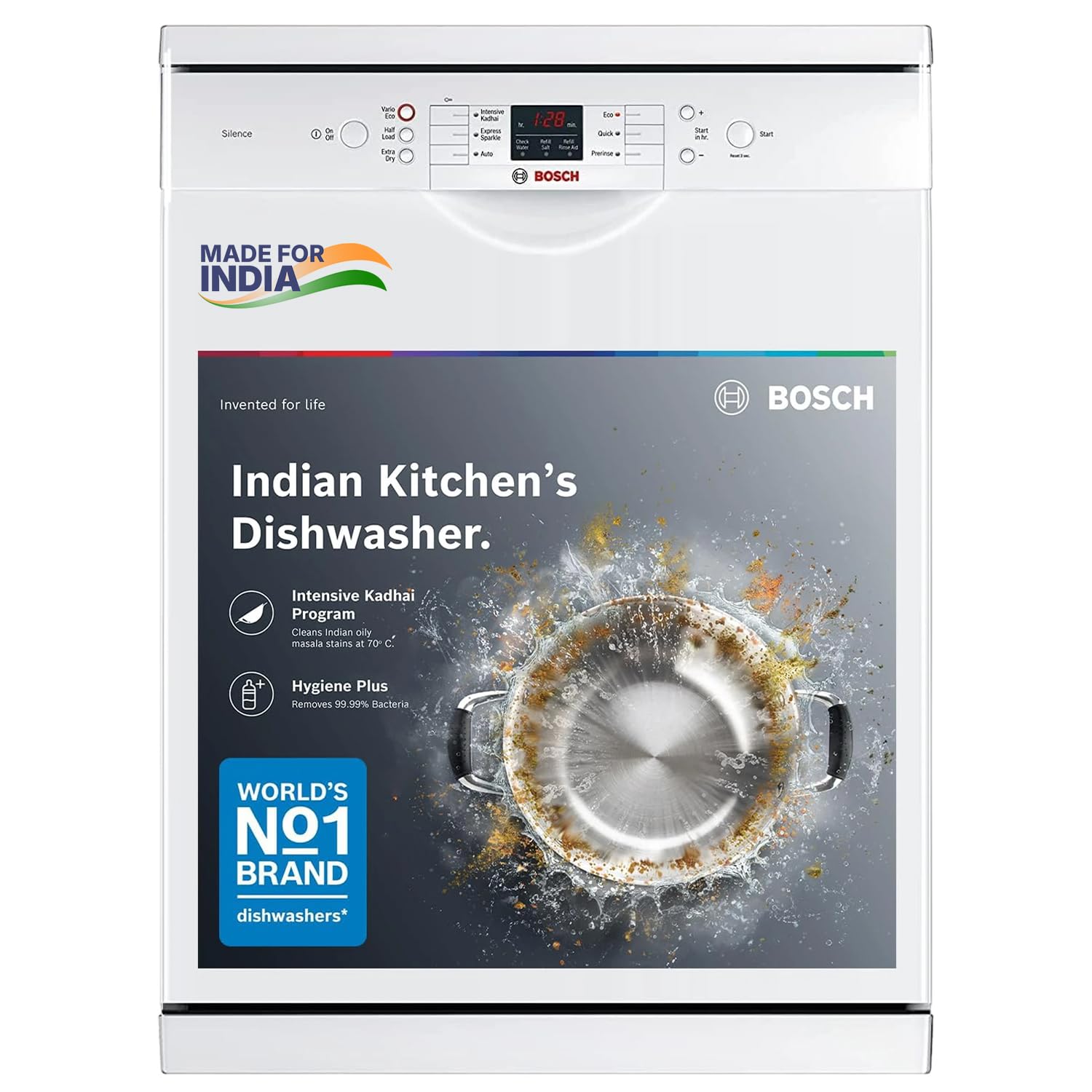
Bosch 13 Place Free-Standing Dishwasher, Intensive Kadhai Program (SMS66GW01I, White)
Families of 4-6 wanting the best-selling, well-proven dishwasher
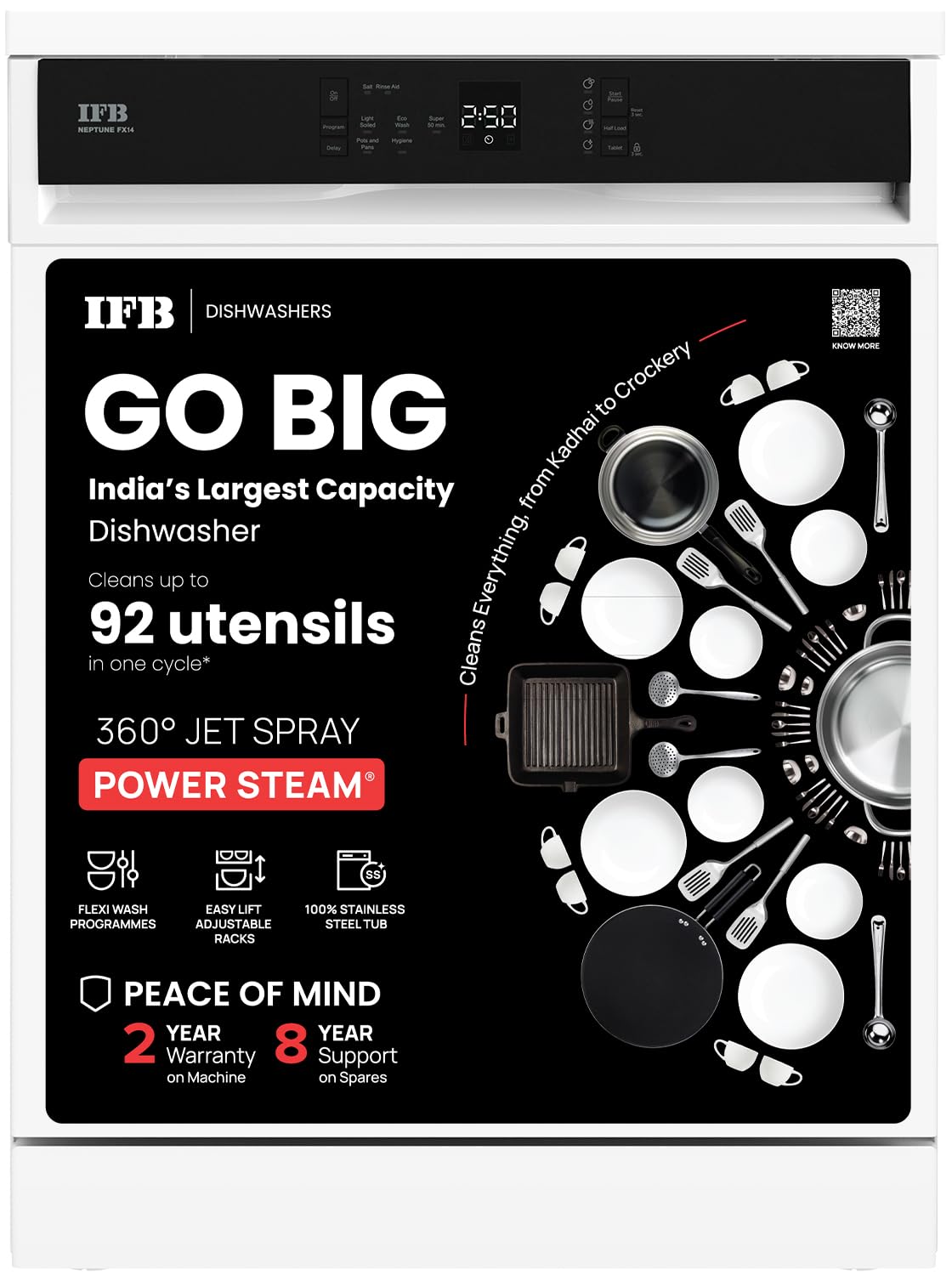
IFB Neptune FX14 14 Place Dishwasher with 70°C Hot Water Wash
Families of 4-6 wanting the highest-rated dishwasher at the lowest price
See all dishwashers → Best Dishwasher in India 2026