Disclosure: This post contains affiliate links. If you buy through our links, we earn a small commission at no extra cost to you. Read our affiliate policy.
Is an Induction Cooktop Under ₹3,000 Worth Buying?
How We Pick Appliances at BestAppliance.in
We list only models rated 4★ or higher on Amazon, with at least 100 reviews and at least 100 bought in the past month. Each pick is scored on our Indian Kitchen Score™ using its specs, its rating and review count, the brand's service reach in India, and its live price. We don't run hands-on lab tests — here's exactly how we score.
Short answer: yes. Under ₹3,000 is where most induction cooktops in India are sold, and it includes the two best sellers we list. Twelve of the 24 induction cooktops we list cost under ₹3,000 (late September 2026), from established names like Prestige, Philips and Usha and from the online brand iBELL.
What you get at this budget: a single-zone induction cooktop with 1,200–2,000W output, push-button or touch controls, a timer, pan detection and auto shut-off, and a flat glass top that's easy to wipe clean after dal splatters. Many models also have Indian preset menus: the Prestige PIC 20 lists 8, including pressure cook, dosa/chapati and idli.
What you mostly don't get: two cooking zones, a rotary knob, or very fine power control (the Hawkins Futura hobs offer 20 settings, but cost more).
Key Specs to Check Before You Buy
Wattage: 1,600–2,000W
For most Indian cooking, 1,600–2,000W is plenty, and most cooktops under ₹3,000 are 2000W. A 1,200–1,300W model boils more slowly but suits homes where a 2000W cooktop trips the circuit. Plug anything above about 1,500W into a 15/16A socket.
Timer
A timer that switches the cooktop off is a useful safety feature if you step away. Check the listing for the maximum time if you slow-cook.
Auto-Shutoff
Look for auto-shutoff when no vessel is detected (pan detection) and when the timer expires, plus overheat protection. This matters most if you have children at home.
Surge Protection
Voltage spikes are a common cause of failed circuit boards. The Prestige PIC 20 lists a voltage regulator and 4kV surge protection; the listing will usually say if a model has it.
Warranty
Most cooktops here carry 1 year. iBELL adds 2 more years if you register within 30 days, and some Philips and Prestige models list 3 years on the coil.
Top Picks Under ₹3,000
1. Prestige PIC 20 1600W — Best Overall Under ₹3,000
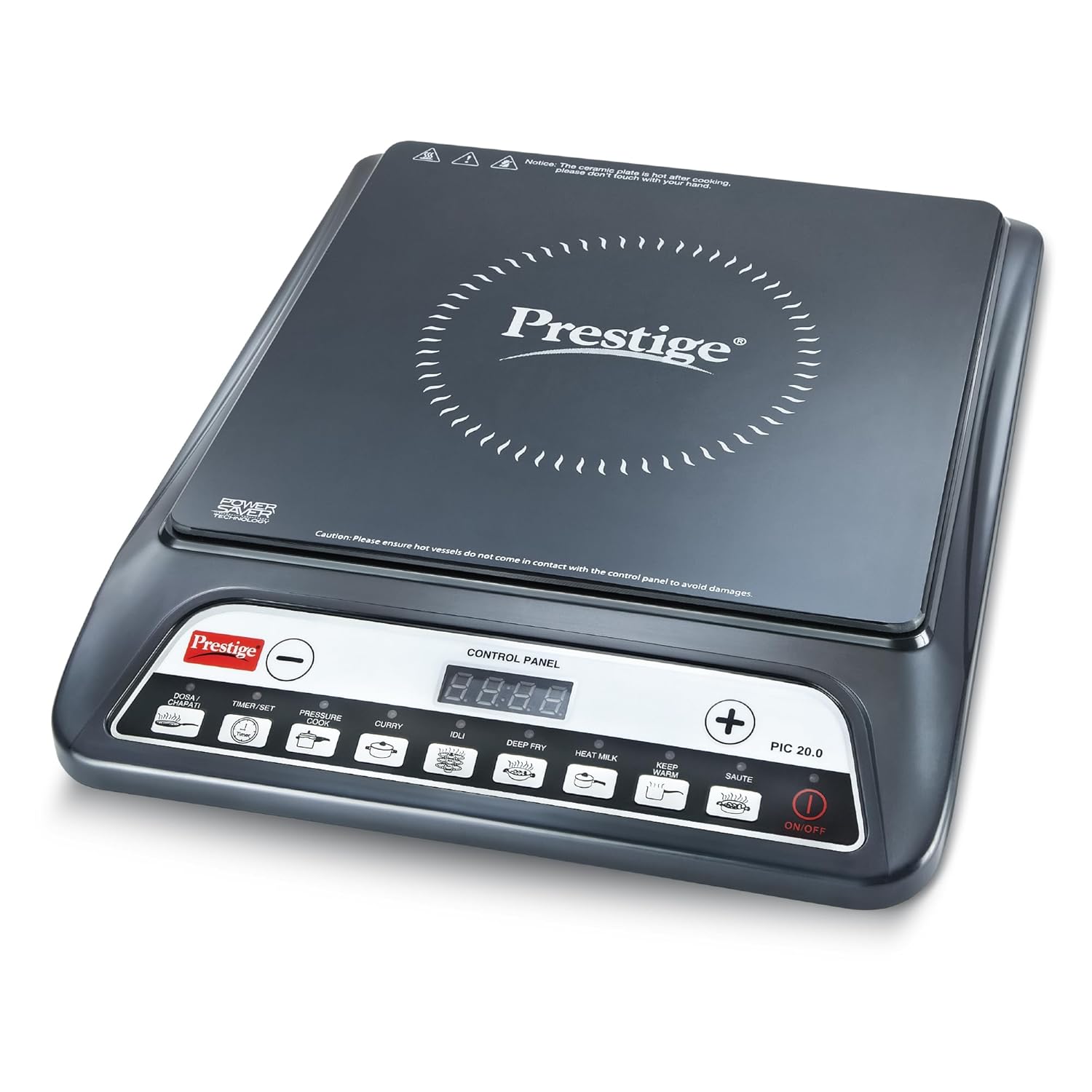
Prestige PIC 20 1600W Induction Cooktop
Most homes wanting the best-selling cooktop with Indian menus
The best-selling induction cooktop we list: 6,000+ bought in the past month, rated 4.0★ from 44,454 ratings, at about ₹2,300.
It has 8 Indian menus (pressure cook, curry, dosa/chapati, idli, deep fry, heat milk, keep warm and sauté), soft-touch push buttons, a voltage regulator and 4kV surge protection. Prestige is a long-established Indian kitchen brand with authorised service in most cities.
Honest limitations: at 1,600W it's slower with large volumes than 2000W models. The 2000W version, the PIC 16.0 Plus, costs a little over ₹3,000.
Best for: most families moving everyday cooking to induction.
2. iBELL SLIM50 2000W — Cheapest
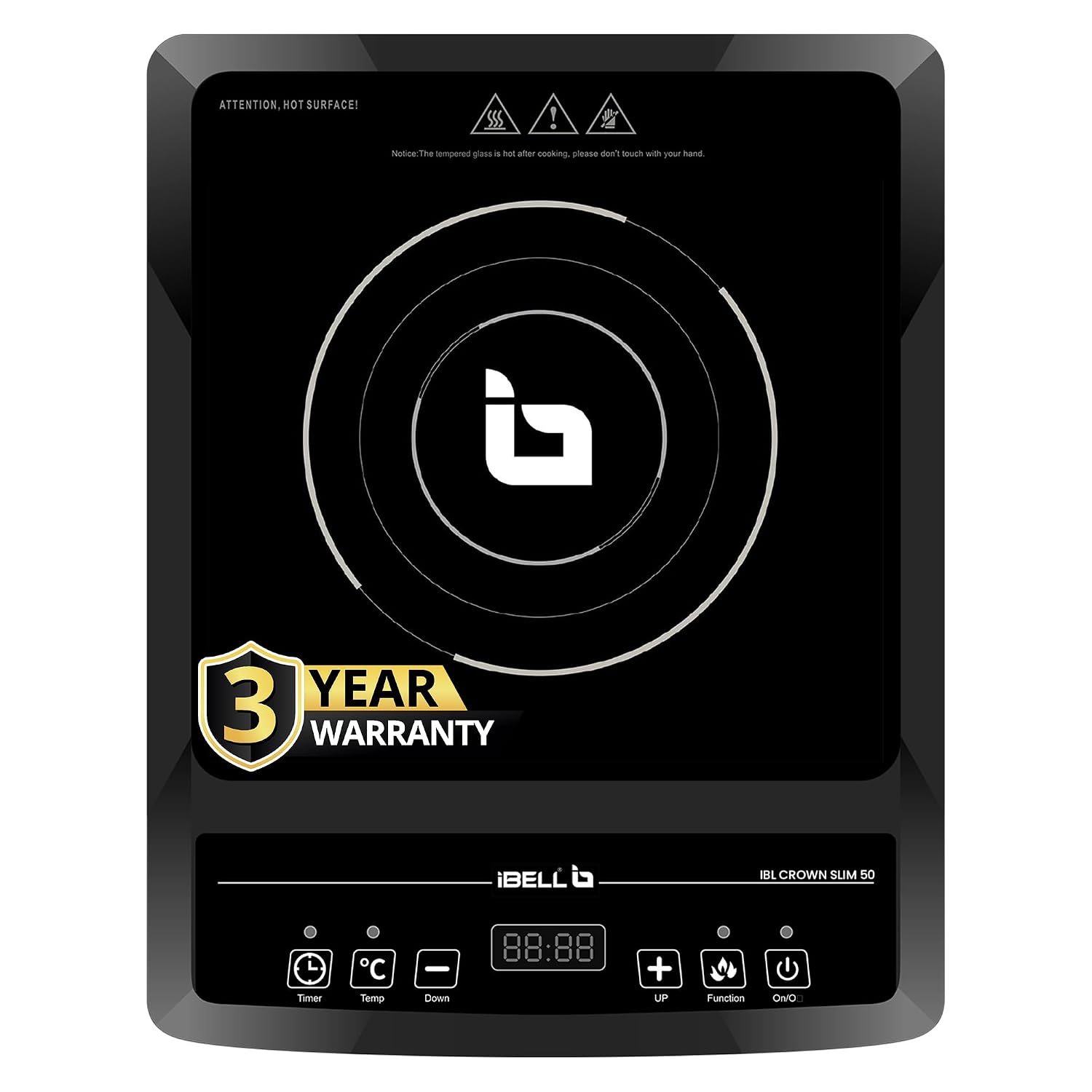
iBELL SLIM50 2000W Induction Cooktop
Students, PGs and second-cooktop buyers wanting 2000W for about ₹2,000
2000W for about ₹2,000, rated 4.0★ from 3,478 ratings and selling 1,000+ a month. It's slim, with touch controls and an LED display, and iBELL gives 1 year of warranty plus 2 more if you register within 30 days.
Honest limitations: no Indian preset menus to speak of, and iBELL sells mostly online, so check how service works for your pin code.
Best for: students, hostels, and a second cooktop.
3. iBELL 20YO 2000W — Best-Rated iBELL
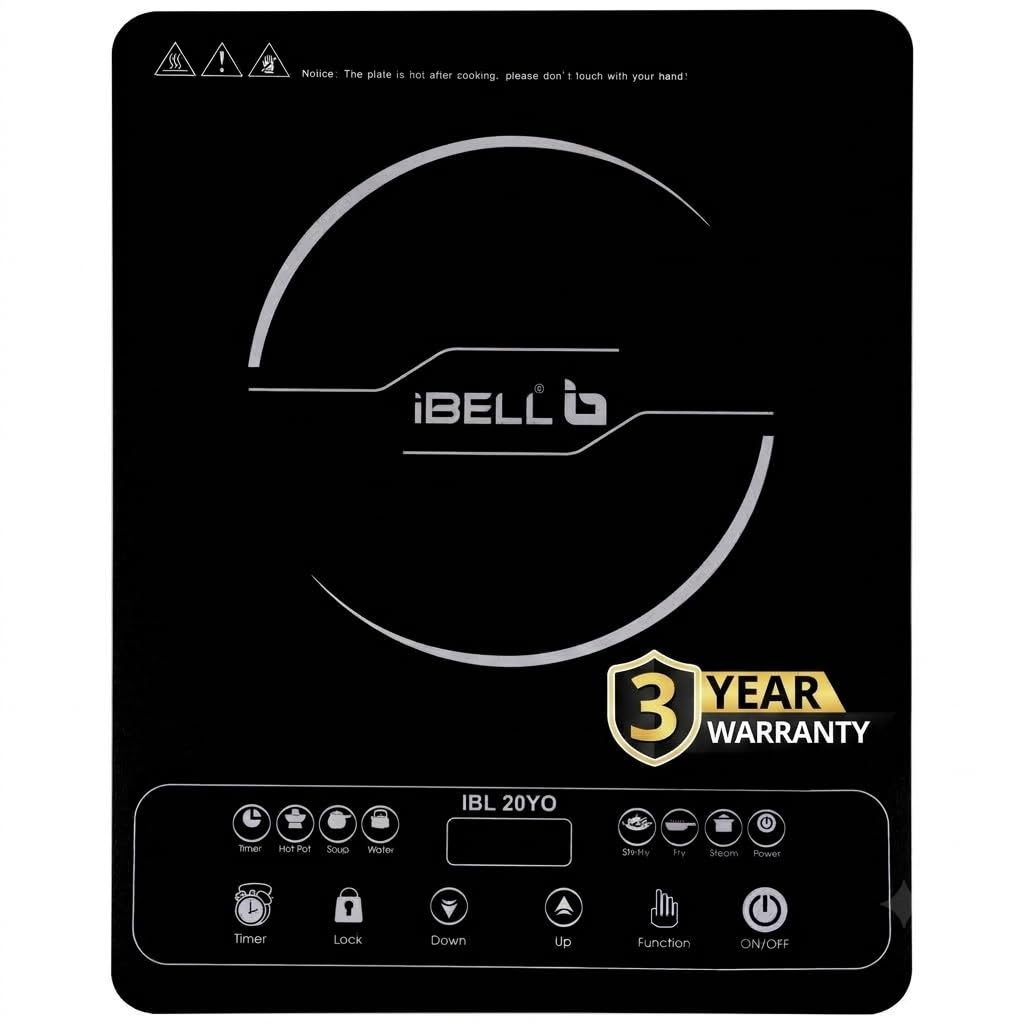
iBELL 20YO 2000W Induction Cooktop
Budget buyers wanting a well-rated full-touch cooktop
4.2★ from 3,929 ratings, 1,000+ a month, at about ₹2,300: a 2000W cooktop with a full touch panel and the same registration-based warranty as the SLIM50.
Honest limitations: the same online-first service as other iBELL models.
4. Usha Cook Joy CX3616 1600W — Highest Rated by Volume
Usha Cook Joy CX3616 1600W Induction Cooktop
Buyers wanting a well-proven Usha with a sealed body
4.2★ from 11,751 ratings, the most-reviewed 4.2★ cooktop under ₹3,000, at about ₹2,900. It has 5 presets plus manual mode, a pan sensor, an auto power-saving mode and a 10A plug.
Honest limitations: 1,600W, and it sells far fewer units today (100+ a month) than the Prestige or iBELL.
5. Prestige PIC 20 WIZ 1600W — Whistle Counter Under ₹3,000
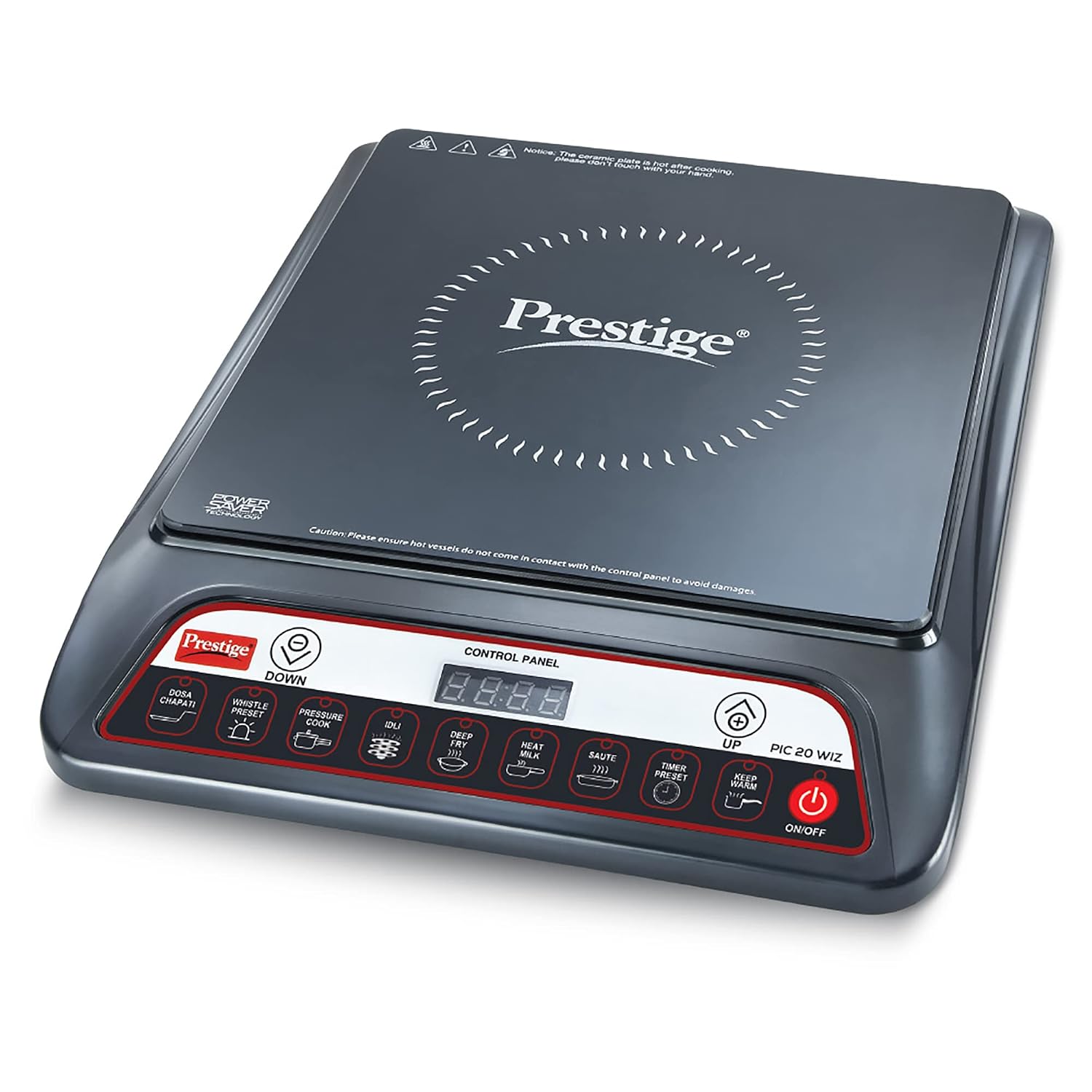
Prestige PIC 20 WIZ 1600W Induction Cooktop with Automatic Whistle Counter
Buyers wanting a whistle counter for less
The cheapest way to get Prestige's automatic whistle counter: set the number of whistles and the cooktop switches off by itself. About ₹2,700, rated 4.1★ from 226 ratings.
Honest limitations: a small rating base so far.
6. Philips HD4934 1300W — For Older Wiring
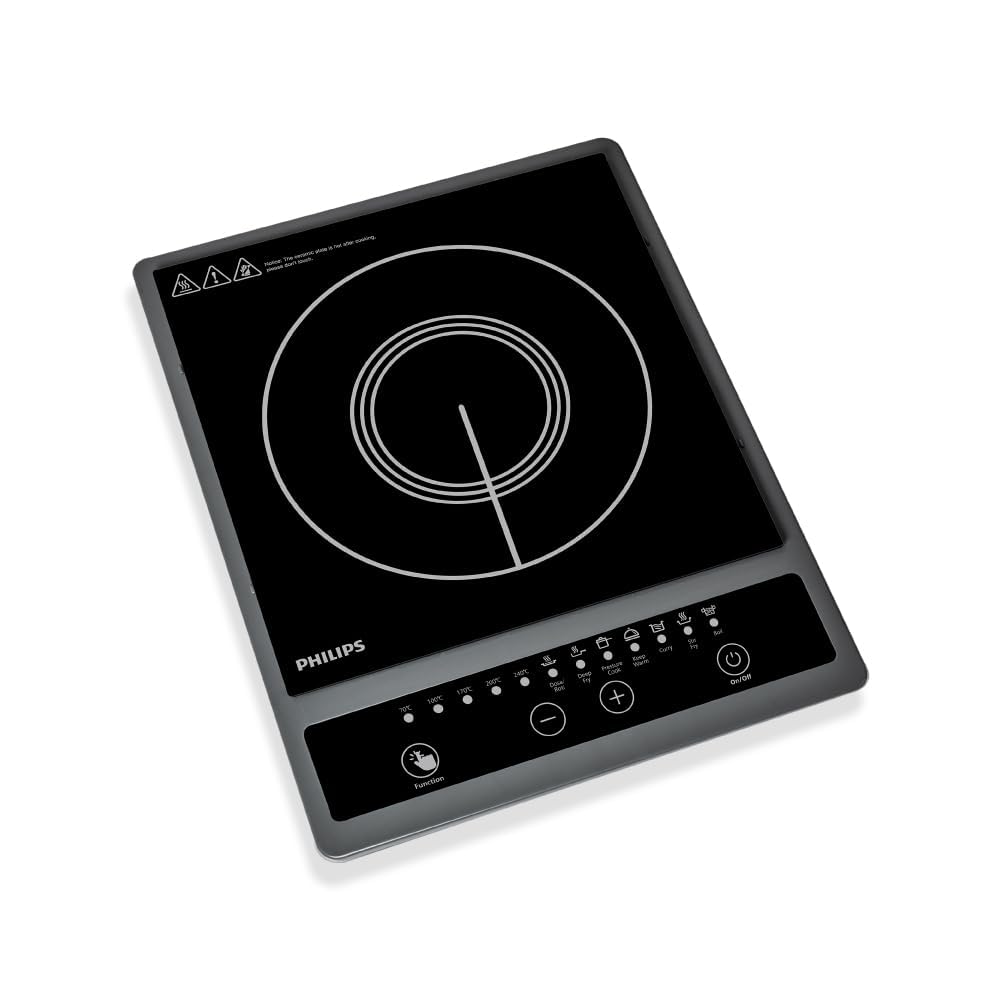
Philips HD4934/00 1300W Induction Cooktop
Low-power homes wanting a Philips with presets
If a 2000W cooktop keeps tripping your circuit, this 1,300W Philips (4.1★ from 1,126 ratings, 400+ a month) is the one to look at, with 7 presets, surge protection and a 3-year coil warranty, at about ₹2,450.
Honest limitations: slower to boil than 1,600–2,000W models.
You can see every cooktop under ₹3,000 we list, with live prices, on our induction cooktops under ₹3,000 page.
Induction Cookware Compatibility — Don't Forget This
Induction cooktops only work with magnetic cookware — the kind that sticks to a magnet. Aluminium, copper, and non-magnetic stainless steel vessels will not work on any induction cooktop regardless of price.
Before buying, test your existing vessels with a refrigerator magnet. If the magnet sticks to the base, the vessel is induction-compatible. Most modern stainless steel and cast iron cookware is compatible. Many households buy an induction-base pressure cooker (Hawkins and Prestige both make them) alongside the cooktop.
Tips for Buying Under ₹3,000
Check the listing for an ISI mark: look for BIS certification on the product page or box.
Avoid no-name cooktops: very cheap unbranded induction cooktops often have no service network and few verifiable reviews. Every model above is rated 4★ or higher by hundreds or thousands of buyers and still sells well today.
Buy 2000W if your wiring allows: the faster boiling is worth it for family quantities.
Related Articles
- Best Induction Cooktop in India 2026 — Top picks at every budget
- Induction Cooktop Buying Guide India — Features and what they mean
- Induction vs Gas Stove India — Running Cost
Frequently Asked Questions
Can I make chapati or roti on an induction cooktop under ₹3,000?
Yes, if you use an induction-compatible tawa (cast iron or an induction-base tawa). Regular aluminium tawas will not work on induction. Use a medium-high setting; induction takes a little getting used to because it doesn't respond exactly like a gas flame. Phulkas puffed over a direct flame still need a gas burner.
Is 1600W induction enough for Indian cooking?
For a household of 2–3 doing everyday cooking (chai, dal, rice, sabzi), yes. For larger quantities or a big pressure cooker, 2,000W is more comfortable, and most cooktops under ₹3,000 are 2000W.
How much electricity does an induction cooktop use per month?
At full power, a 2,000W cooktop uses 2 units an hour, about ₹16 at ₹8 a unit. Most cooking runs at lower settings for 30–45 minutes a meal, so typical use is a few hundred rupees a month. Whether that beats LPG depends on your tariff: see our induction vs gas cost breakdown.
What is the difference between an induction cooktop and an infrared cooktop?
Induction heats the vessel directly through a magnetic field, so the glass only gets hot from the pan sitting on it, and it needs magnetic cookware. An infrared cooktop heats the glass with a radiant element, which then heats the vessel; it works with any cookware but wastes more heat and its surface gets very hot. Every model in this post is a true induction cooktop.
Prices, ratings and monthly sales from Amazon India, late September 2026; check the live price above before buying.
Related Reading
- Best Induction Cooktops in India 2026 — All Models — All 24 models we list, with live prices