Disclosure: This post contains affiliate links. If you buy through our links, we earn a small commission at no extra cost to you. Read our affiliate policy.
Walk into most Indian kitchens and you'll still find the gas stove holding its ground, but an induction cooktop has become a common second (and sometimes main) cooktop: it's quick, there's no flame, and it's easy to clean.
Not all induction cooktops are equal, though. This guide covers what matters before you buy: wattage, features, cookware, budget, brands and the real running cost.
Every model we name here is one we list: rated 4★ or higher on Amazon, with at least 100 reviews and at least 100 bought in the past month (late September 2026).
Quick Answer
What should I look for when buying an induction cooktop in India?
For most Indian cooking, buy a 1,600–2,100W cooktop with pan detection, auto shut-off, surge protection and a few Indian preset menus. Check your cookware first: it needs a flat magnetic base. Our Best Overall is the Philips Viva HD4928 (2100W, 4.2★ from 56,845 ratings); our Best Value is the Prestige PIC 20 (1600W, 8 Indian menus, about ₹2,300), the best seller we list.
1. Why Induction Over Gas? Cost, Safety and Speed
The Cost Angle
The most common question: is induction actually cheaper than gas in India? It depends on your electricity tariff.
A 14.2 kg LPG cylinder costs roughly ₹850–950 in most cities and holds about 180 units (kWh) of heat. A gas flame gets only part of that heat into the pan; induction puts about 85% of its power into the vessel. So a cylinder's worth of cooking takes roughly 90–140 units of electricity:
- At ₹5 a unit: about ₹450–700, clearly cheaper than the cylinder
- At ₹8 a unit: about ₹720–1,100, roughly break-even
So induction saves the most if you're on a lower tariff slab. We work through it in more detail in induction vs gas stove running cost.
Safety Advantages
There's no open flame and no gas line, which matters most in:
- Homes with young children or elderly members: no flame to catch clothing
- Compact urban kitchens: no cylinder to store and no leak risk
- After cooking: the glass only gets hot from the pan sitting on it, though it stays hot for a few minutes, so don't touch it straight away
Speed
Induction heats the vessel directly. On a 2000W cooktop, a litre of water comes to the boil in roughly 3–4 minutes. That helps with the morning chai-and-milk rush.
2. Wattage Guide: What Indian Cooking Actually Needs
1200–1300W — Light Use or Older Wiring
Best for: tea, milk, reheating, a bachelor kitchen, and homes where a 2000W cooktop trips the circuit. Examples: the Prestige Xpress (1200W) and Philips HD4934 (1300W).
1600W — Everyday Cooking for 2–3
Best for: dal, sabzi, rice and chai. The Prestige PIC 20 and Usha Cook Joy CX3616 are 1600W.
1900–2100W — Most Families
Best for: families of 4+, frequent pressure cooking and deep frying. Most models we list are 2000W.
2200W and Two Zones
The Prestige PIC 6.1 V3 (2200W) is the most powerful single cooktop we list. The Hawkins Futura Dual Hob gives you 3600W across two zones.
Check your socket: plug anything above about 1,500W into a 15/16A socket, not a 5A point or a thin extension cord.
3. Key Features to Look For
Pan Detection and Auto Shut-Off
The cooktop should switch off when no vessel is detected, when the timer ends, or when it overheats. Don't buy one without these.
Child Lock
Useful with young children around. The Hawkins Futura hobs list one; check the listing for others.
Power Levels and Fine Control
Most cooktops offer a handful of power levels. The Hawkins Futura hobs offer 20 settings, down to 100W for a gentle simmer, which is closer to the control of a gas flame. The CÜRAA IndiePro uses a rotary knob instead of buttons.
Automatic Whistle Counter
Three Prestige models we list (PIC 6.1 V3, PIC 3.1 V3, PIC 20 WIZ) count pressure-cooker whistles and switch off by themselves. If you pressure-cook daily, it's worth looking for.
Surge and Voltage Protection
Voltage swings are common in many parts of India. Check the listing: the Prestige PIC 20 and PIC 16.0 Plus list a voltage regulator and 4kV surge protection, the V-Guard VIC 2.0 lists 5kV and the CÜRAA IndiePro 6kV. In areas with severe fluctuations, a correctly sized stabiliser is still worth having.
ISI Mark (BIS Certification)
Look for the ISI mark on the listing or box.
Push Buttons vs Touch
Touch panels wipe clean easily but can be fiddly with wet or oily fingers; push buttons are easier to press mid-cooking. Both are common at every price.
Warranty
Most models carry 1 year. Some Philips, Prestige, Preethi and V-Guard models list 3 years on the coil, iBELL adds 2 years if you register within 30 days, and the CÜRAA lists 2 years.
4. Indian Cookware Compatibility — The Single Most Important Thing to Know
Induction cooktops only work with magnetic cookware. If a magnet sticks to the bottom of your vessel, it will work on induction.
Works on Induction:
- Cast iron kadai and tawa — retains heat well for rotis and frying
- Stainless steel with a magnetic base — much modern Indian stainless steel cookware is induction-compatible; check the label
- Induction-base non-stick pans — check for the induction symbol
- Enamelled cast iron — heavy, but good for slow cooking
Does NOT Work on Induction:
- Plain aluminium — the old aluminium pressure cooker, patila or idli pot won't heat
- Pure copper and brass — non-magnetic
- Glass and ceramic
- Clay pots
Pro tip: do the magnet test on your existing cookware before buying, and budget for at least an induction-base pressure cooker and a flat kadai or tawa.
5. Budget Guide
About ₹2,000 — Basic but Capable
2000W iBELL models (SLIM50, 30YO) and the 1200W Prestige Xpress. Good for students, hostels and a second cooktop. Our Budget Pick is the iBELL SLIM50.
₹2,000–₹3,000 — Most Popular
This is where most cooktops sell. Expect 1,600–2,000W, presets, a timer and surge protection. Best picks: Prestige PIC 20 (our Best Value, 6,000+ a month), iBELL 20YO, Usha Cook Joy CX3616, Prestige PIC 20 WIZ (whistle counter).
₹3,000–₹5,000 — More Power and Features
2,000–2,200W, more presets, longer coil warranties, whistle counters. Best picks: Philips Viva HD4928 (our Best Overall), Prestige PIC 16.0 Plus, Prestige PIC 6.1 V3, Hawkins Futura Single, CÜRAA IndiePro (rotary knob).
Above ₹5,000 — Two Zones and Glass Panels
Best picks: Hawkins Futura Dual Hob (our Premium Pick, two zones), Philips Viva HD4938/01 (full glass panel, 10 Indian menus).
6. Brands in Our List
- Prestige — the most models we list (9), including the two best sellers and all three whistle-counter models.
- Philips — four models, including our Best Overall, the most-reviewed cooktop we list.
- iBELL — five models around ₹2,000–2,500, all 2000W, with a registration-based 3-year warranty; sells mostly online.
- Hawkins — the pressure-cooker maker's Futura hobs, single and dual zone, with 20 power settings.
- Usha, Preethi, V-Guard and CÜRAA — one model each.
Prestige, Philips, Usha, Preethi, V-Guard and Hawkins are long-established Indian appliance brands with authorised service. For online-first brands like iBELL and CÜRAA, check how service works for your pin code before buying.
7. Our Top Picks Compared
| Model | Wattage | Rating | Bought last month | Highlight |
|---|---|---|---|---|
| Philips Viva HD4928 | 2100W | 4.2★ (56,845) | 3,000+ | Best Overall; most-reviewed |
| Prestige PIC 20 | 1600W | 4.0★ (44,454) | 6,000+ | Best Value; 8 Indian menus |
| iBELL SLIM50 | 2000W | 4.0★ (3,478) | 1,000+ | Budget Pick; about ₹2,000 |
| Prestige PIC 6.1 V3 | 2200W | 4.0★ (11,538) | 400+ | Whistle counter |
| Hawkins Futura Dual Hob | 3600W (two zones) | 4.4★ (196) | 600+ | Premium Pick; two zones |
Ratings and sales from Amazon India, late September 2026. Live prices are on our induction cooktop page.
Check Today's Prices
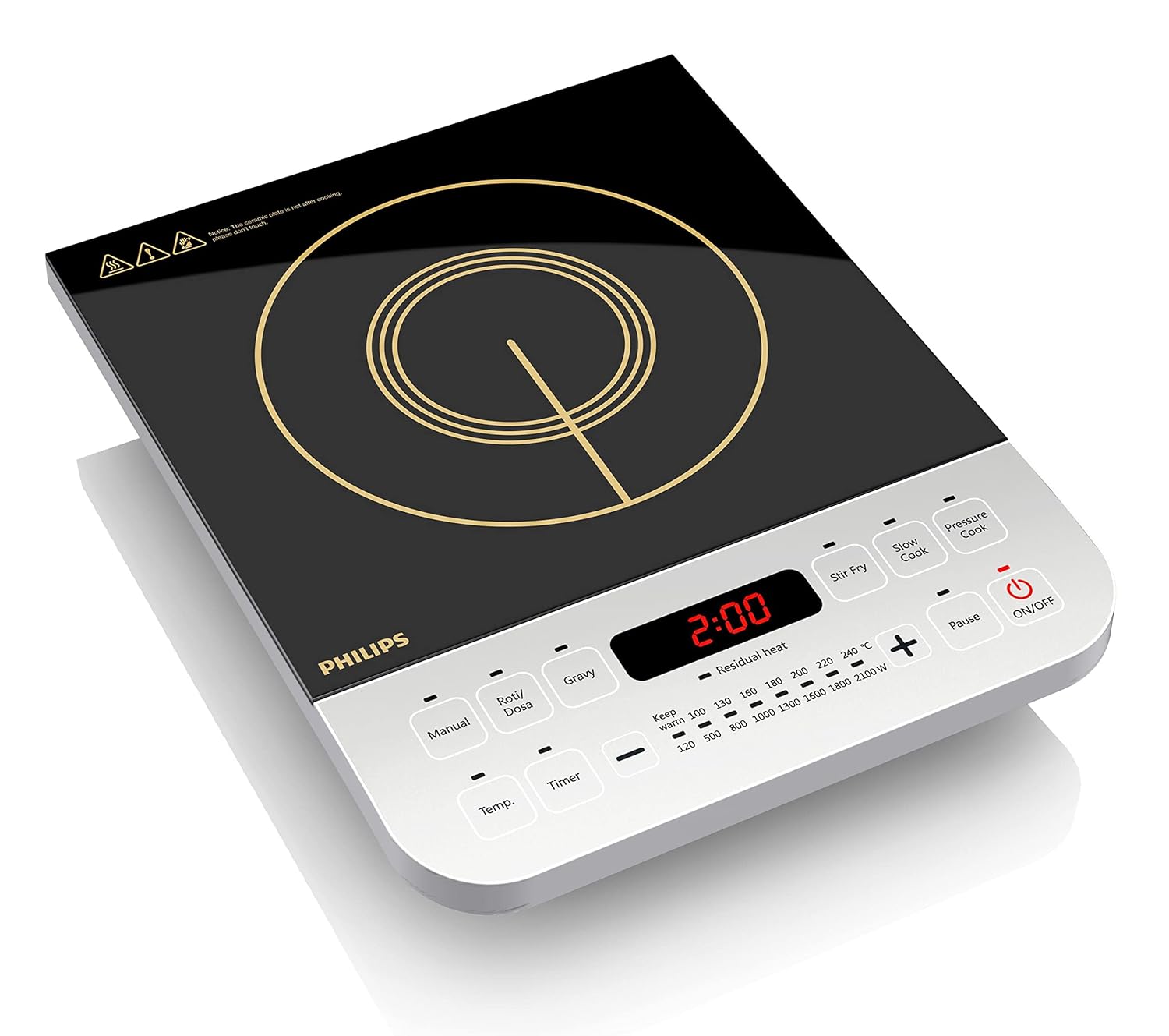
Philips Viva Collection HD4928/01 2100W Induction Cooktop
Most families: the most-reviewed induction cooktop we list
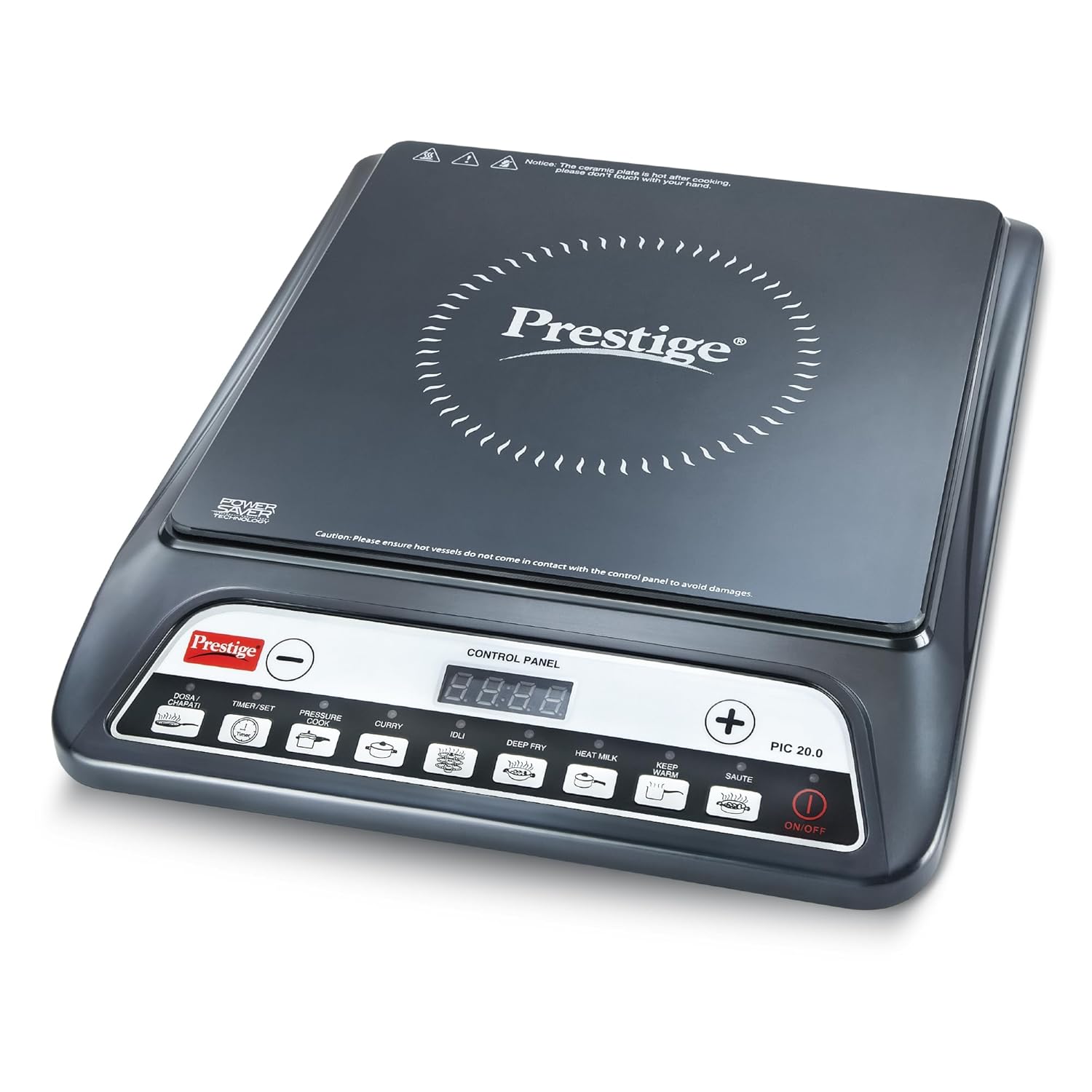
Prestige PIC 20 1600W Induction Cooktop
Most homes wanting the best-selling cooktop with Indian menus
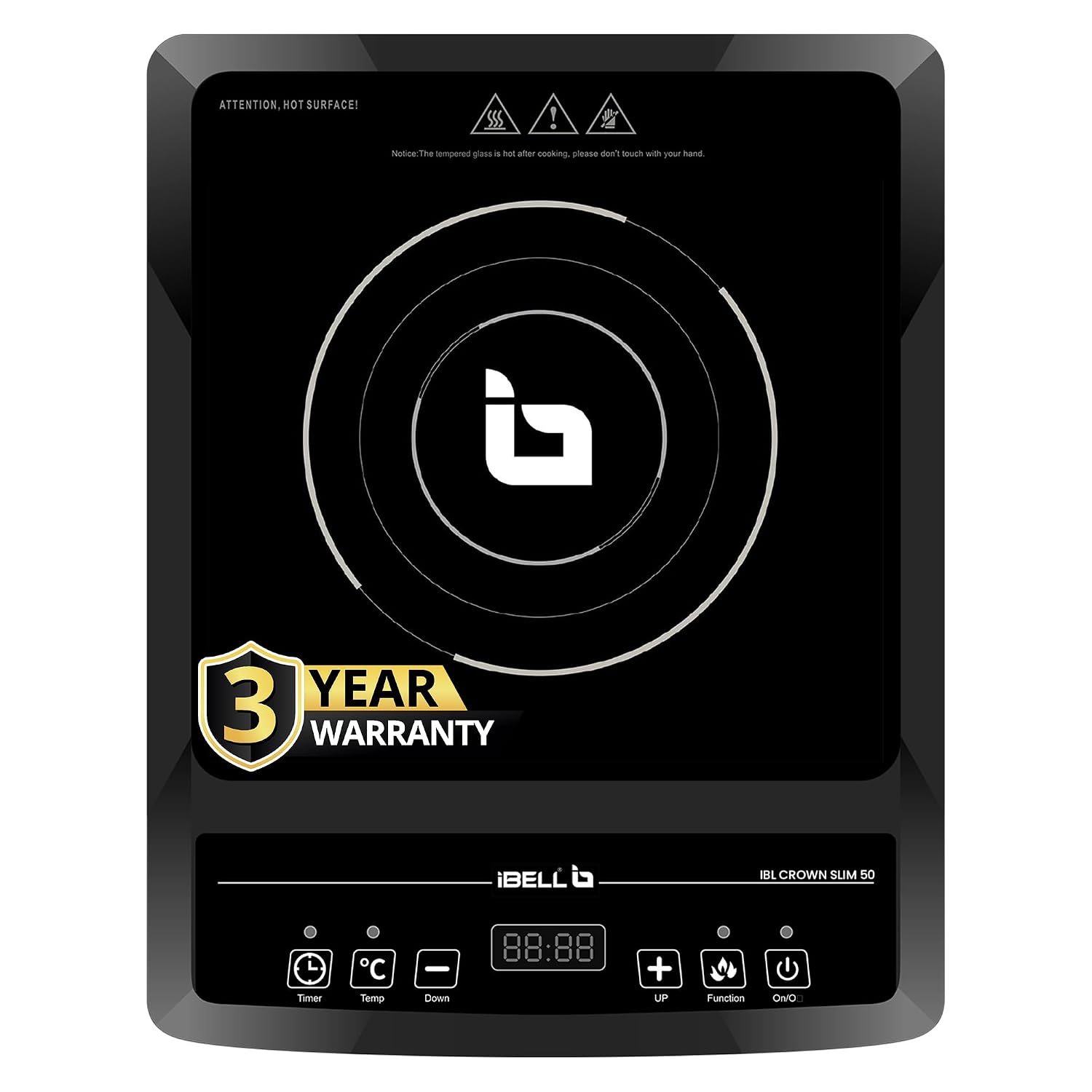
iBELL SLIM50 2000W Induction Cooktop
Students, PGs and second-cooktop buyers wanting 2000W for about ₹2,000
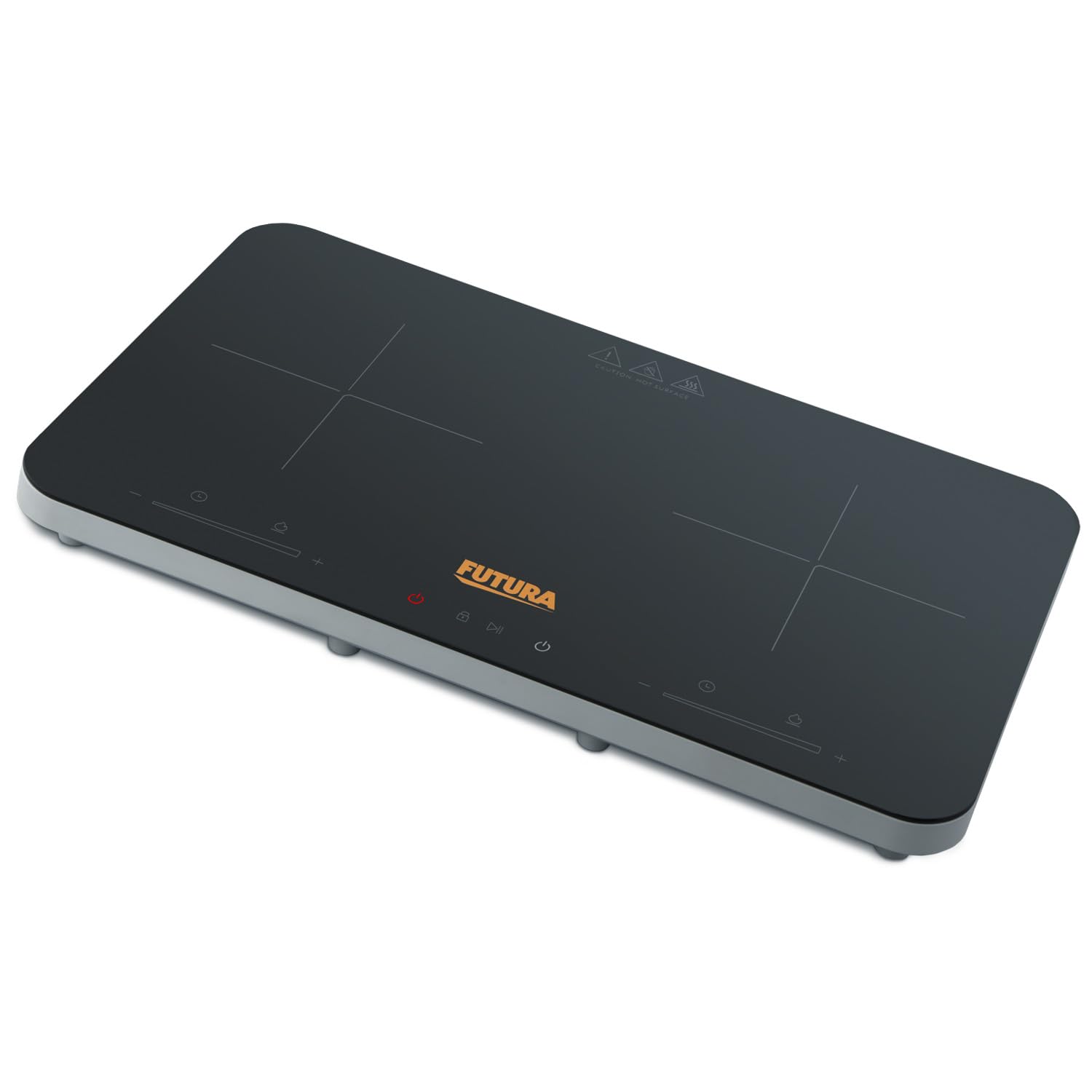
Hawkins Futura Dual Hob Induction Cooktop 3600W (FIC2A1)
Families wanting two zones to cook two dishes at once
Frequently Asked Questions (FAQs)
Q1. Can I use my existing pressure cooker on an induction cooktop?
A: Only if it has a magnetic base. Plain aluminium pressure cookers won't work. Stainless steel and induction-base pressure cookers from Hawkins, Prestige and others will. Do the magnet test before assuming.
Q2. Is induction cooking safe during pregnancy?
A: For normal home use, there's no established evidence of harm. The magnetic field is strongest right at the cooktop surface and drops off quickly with distance. If you use a pacemaker or another implanted medical device, check with your doctor and the device maker's guidance.
Q3. What happens during a power cut?
A: The cooktop stops, like any other electric appliance. If power cuts are frequent where you live, keep a gas burner as backup.
Q4. Do I need a voltage stabilizer for my induction cooktop?
A: Many models have built-in surge protection or a voltage regulator; check the listing. If your area sees frequent, large voltage swings, a stabiliser rated well above the cooktop's wattage adds protection.
Q5. Can I use an induction cooktop on a 5A socket?
A: Not a 1,500W+ cooktop. Use a 15/16A socket (the larger round-pin socket). The Usha CX3616 ships with a 10A plug; check your model's plug and your wiring.
Q6. My induction cooktop shows an error code — what does it mean?
A: Error codes differ between brands and models. The most common causes are no vessel or a non-magnetic one, overheating, and voltage outside the cooktop's range. Check the manual for your model's codes.
Q7. Is the glass surface of an induction cooktop fragile?
A: The glass is toughened, but dropping heavy cast iron cookware or using abrasive scrubbers can damage it. Lift cookware rather than dragging it across the surface.
Final Verdict: Which Induction Cooktop Should You Buy?
- Tight budget (about ₹2,000): iBELL SLIM50
- Best value: Prestige PIC 20
- Best overall: Philips Viva HD4928
- Daily pressure cooking: Prestige PIC 6.1 V3 or PIC 20 WIZ (automatic whistle counter)
- Two zones: Hawkins Futura Dual Hob
Pair it with induction-compatible cookware, check your socket, and you'll have a fast, flame-free second (or main) cooktop.
Related Reading
- Best Induction Cooktop in India 2026 — All 24 models we list, with live prices
- Best Induction Cooktop in India 2026 — Top Picks — Our picks + the cookware trap
- Best Induction Cooktop Under ₹3,000 — Budget picks
- Best Induction Cooktop for South Indian Cooking — Regional cooking guide
- Induction vs Gas Stove — Cost Comparison — Running-cost breakdown
- BEE Star Rating Explained — India energy labels guide