Disclosure: This post contains affiliate links. If you buy through our links, we earn a small commission at no extra cost to you. Read our affiliate policy.
With electricity tariffs varying widely across Indian states and slabs, "induction or gas?" doesn't have one answer for everyone. Beyond the price of the appliance, what most people want to know is: which one costs less to run every day, and which works better for Indian cooking?
Here's the arithmetic, worked through so you can plug in your own tariff, followed by an honest look at cooking quality.
Part 1: The Running Cost Comparison
Compare Like for Like: One Cylinder's Worth of Cooking
The cleanest way to compare is to ask how much electricity it takes to do the same cooking as one LPG cylinder.
- A 14.2 kg LPG cylinder costs roughly ₹850–950 in most cities (non-subsidised; check your own refill price).
- It holds roughly 180 units (kWh) of heat.
- A gas flame gets only part of that heat into the pan; much of it escapes around the vessel. Induction puts about 85% of the power it draws into the vessel.
- So doing a cylinder's worth of cooking on induction takes roughly 90–140 units of electricity. The range is wide because real gas-stove efficiency depends on the burner, the vessel and how the flame is set.
What That Costs at Your Tariff
| Your electricity rate | Induction cost for a cylinder's worth of cooking | vs one cylinder (₹850–950) |
|---|---|---|
| ₹4 a unit | ₹360–560 | Clearly cheaper |
| ₹5 a unit | ₹450–700 | Clearly cheaper |
| ₹6 a unit | ₹540–840 | Usually cheaper |
| ₹7 a unit | ₹630–980 | Slightly cheaper to break-even |
| ₹8 a unit | ₹720–1,120 | Roughly break-even |
| ₹9+ a unit | ₹810–1,260+ | Can cost more |
How to use this: look at your electricity bill for the rate on your highest slab, because extra units from induction get charged at that rate, not your average. Many states charge less for the first slab of units and more above it, so a household that already uses a lot of electricity (ACs, geyser) pays the higher rate on every extra unit.
How Many Cylinders a Month?
A family of four commonly uses about one cylinder every month or so, more in heavy-cooking households. If you move most of that cooking to induction, the saving (or extra cost) per month is roughly the difference in the table above. If you use induction alongside gas, as most families do, scale it down to the share of cooking you move.
The honest summary: on lower tariffs induction can save several hundred rupees a month; on the highest slabs it's about break-even, and the reasons to switch are speed, safety and cleaning rather than money.
Part 2: Cooking Quality — Where Gas and Induction Each Win
Let's be honest about this, because most Indian households have cooking patterns that don't fit neatly into "use only induction".
Where Gas Genuinely Wins
1. Phulka Roti A puffed phulka is cooked on a tawa and then finished directly on the flame. That last step isn't possible on induction. You can make rotis entirely on an induction tawa, but they won't puff the same way.
2. Charring and Fire-Roasting Roasting brinjal for baingan bharta, charring papad or peppers, and getting a smoky edge in a bhuna dish all need a direct flame.
3. Round-Bottom Kadhai Cooking Induction needs a flat-bottom vessel with a magnetic base. A traditional curved kadhai works only on gas.
4. Power Cuts Gas works without electricity. In areas with frequent load shedding, a gas stove remains essential backup.
5. Very Large Vessels A single induction coil heats the area above it, so a very large pressure cooker or a big kadhai for a joint family may heat unevenly at the edges.
Where Induction Genuinely Wins
1. Speed Induction heats the vessel directly. On a 2000W cooktop, a litre of water comes to the boil in roughly 3–4 minutes, usually quicker than a typical domestic gas burner. That helps with the morning milk-and-chai rush.
2. Steady Low Heat Holding a gentle simmer on gas takes constant knob adjustment. Induction holds a set power level steadily, and some models go very low: the Hawkins Futura hobs have 20 settings, down to 100W. That helps with slow-cooked dal and milk-based sweets like kheer that scorch easily.
3. Pressure Cooking on Autopilot Three Prestige models we list (PIC 6.1 V3, PIC 3.1 V3 and PIC 20 WIZ) count the whistles and switch off by themselves.
4. Safety No open flame and no gas line, which matters in homes with:
- Young children
- Elderly family members
- Flammable items near the stove
5. Easy Cleaning A flat glass top wipes clean in seconds; gas grates and burners need soaking and scrubbing.
6. Kitchen Air Gas combustion releases nitrogen dioxide and other by-products into the kitchen, and studies have linked gas cooking in poorly ventilated kitchens to more respiratory problems in children. Induction burns nothing.
Part 3: The Vessel Compatibility Problem
The biggest practical barrier to induction is cookware.
Works on Induction:
- Stainless steel vessels with a magnetic base (many modern kadhais, pressure cookers and tawas) ✅
- Cast iron (tawa, dutch ovens) ✅
- Induction-compatible non-stick (labelled with the induction symbol) ✅
Does NOT work on Induction:
- Traditional aluminium pressure cookers ❌
- Copper vessels ❌
- Older non-stick pans without a magnetic base ❌
- Round-bottom brass and bronze vessels ❌
Quick test: hold a magnet to the bottom of your vessel. If it sticks firmly, it works on induction.
Most families switching need a few new pieces: usually an induction-base pressure cooker, a flat tawa and a flat kadhai. Count that in the cost of switching, especially if your tariff means the running saving is small.
Part 4: The Hybrid Kitchen — Our Real Recommendation
For most Indian households the answer is neither "go fully induction" nor "stick entirely with gas". It's both:
Keep your gas stove for:
- Phulkas and fire-roasting
- Round-bottom kadhai cooking
- Very large vessels
- Backup during power cuts
Add an induction cooktop for:
- Boiling milk, water and tea
- Simmering dal, rasam and curries
- Pressure cooking (especially with a whistle counter)
- A second cooking zone during the dinner rush
A cylinder then lasts longer, and whether that saves money overall depends on your tariff, as the table above shows.
Which Induction Cooktop Should You Buy?
Every model we list is rated 4★ or higher on Amazon, with at least 100 reviews and at least 100 bought in the past month (late September 2026).
| Need | Our pick | Why |
|---|---|---|
| Tight budget | iBELL SLIM50 | 2000W for about ₹2,000 |
| Best value | Prestige PIC 20 | Best seller we list; 8 Indian menus |
| Best overall | Philips Viva HD4928/01 | 2100W; 4.2★ from 56,845 ratings |
| Daily pressure cooking | Prestige PIC 6.1 V3 | Automatic whistle counter, 2200W |
| Two zones | Hawkins Futura Dual Hob | 3600W across two zones |
See all 24 induction cooktops we list →
Related Articles
- Best Induction Cooktop for South Indian Cooking
- Induction Cooktop Buying Guide India
- Best Air Fryer vs Microwave Oven for Indian Cooking
Frequently Asked Questions
Which is cheaper — induction cooktop or gas stove in India in 2026?
It depends on your electricity tariff. A cylinder's worth of cooking takes roughly 90–140 units on induction. At ₹5 a unit that's ₹450–700, clearly cheaper than a ₹850–950 cylinder; at ₹8 a unit it's ₹720–1,120, roughly break-even. Use the rate on your highest slab, since that's what the extra units cost you.
Can an induction cooktop replace a gas stove completely for Indian cooking?
Not entirely, for most families. Induction can't puff phulkas on a flame, fire-roast brinjal or papad, or heat a round-bottom kadhai. For most everyday cooking — milk, dal, rice, curries, pressure cooking — it works well and is quick.
Which induction cooktop is best for Indian cooking in 2026?
Our Best Overall is the Philips Viva HD4928/01 (2100W, 4.2★ from 56,845 ratings). Our Best Value is the Prestige PIC 20, the best seller we list (6,000+ a month), with 8 Indian menus for about ₹2,300. On a tight budget, the iBELL SLIM50 gives you 2000W for about ₹2,000.
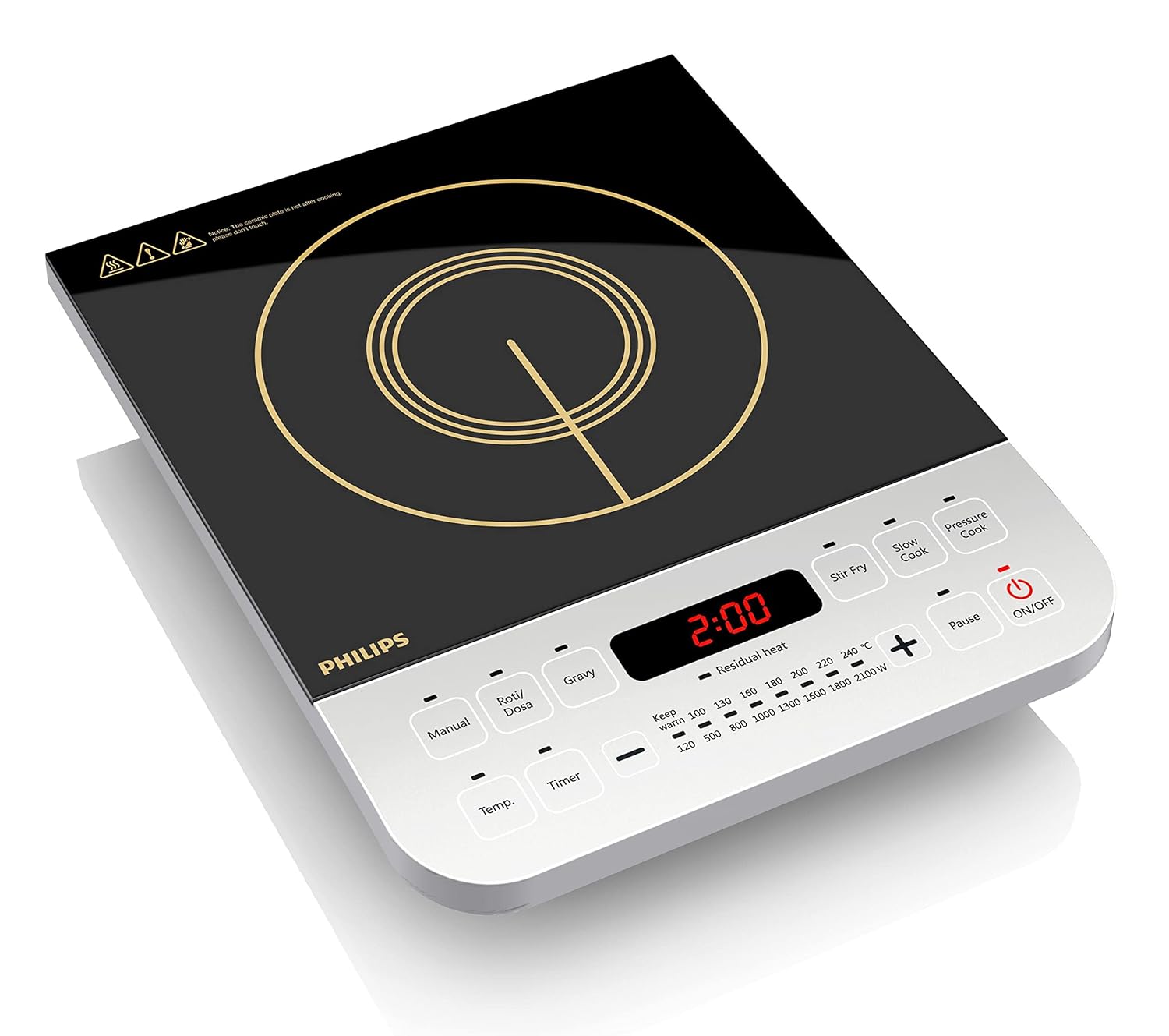
Philips Viva Collection HD4928/01 2100W Induction Cooktop
Most families: the most-reviewed induction cooktop we list
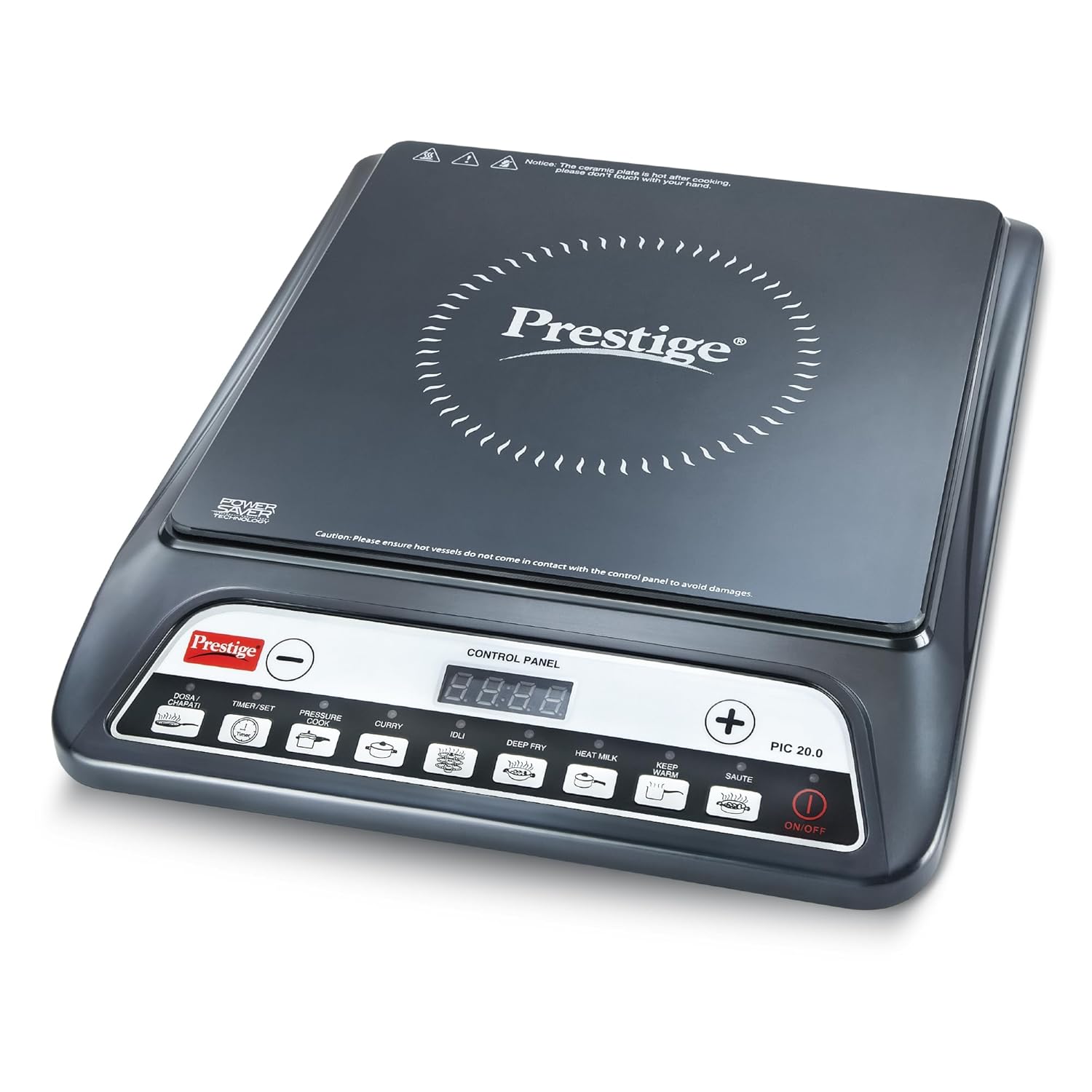
Prestige PIC 20 1600W Induction Cooktop
Most homes wanting the best-selling cooktop with Indian menus
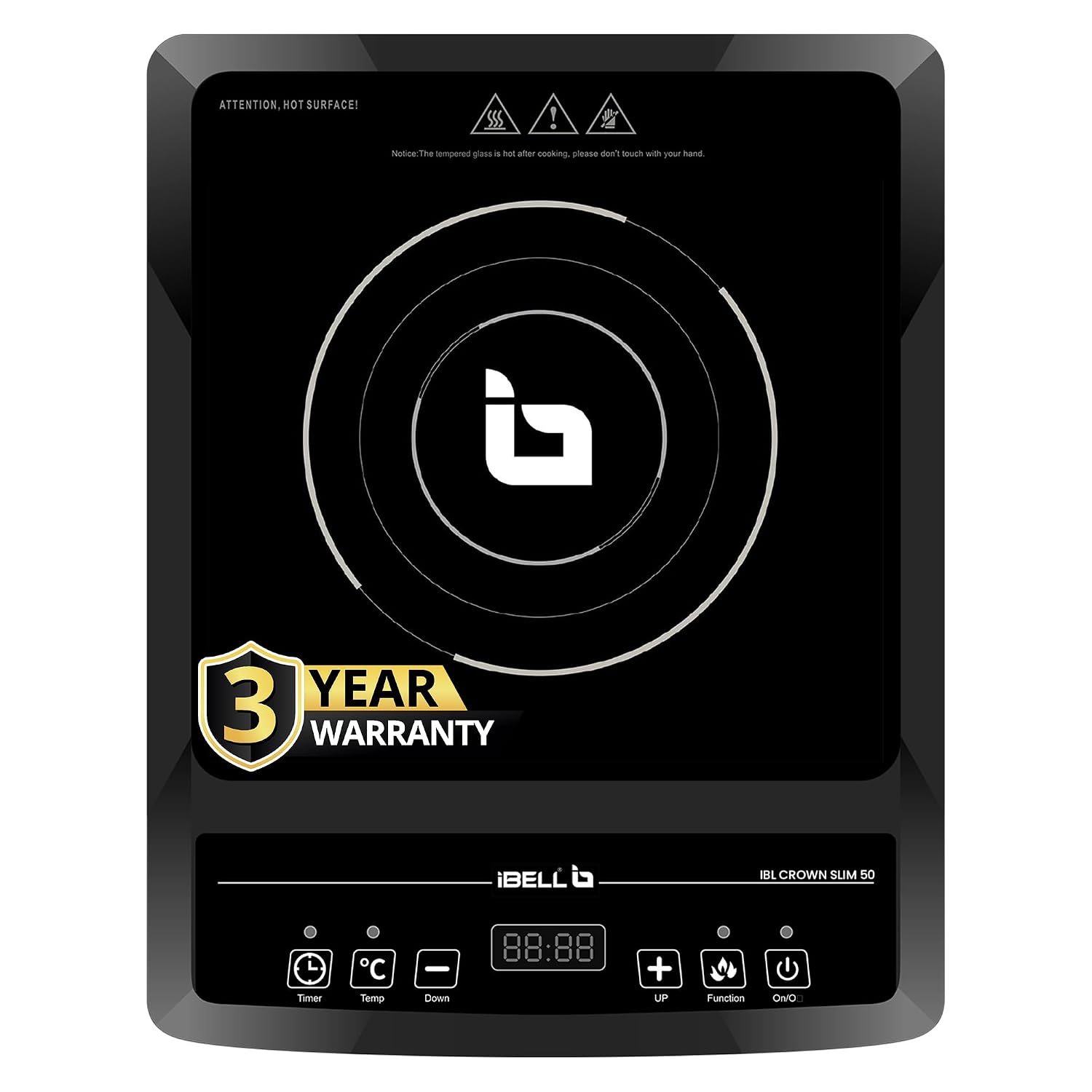
iBELL SLIM50 2000W Induction Cooktop
Students, PGs and second-cooktop buyers wanting 2000W for about ₹2,000
Do all my current vessels work on an induction cooktop?
Not all. Induction only works with magnetic-bottom vessels. Hold a magnet to the bottom: if it sticks firmly, it works. Many modern stainless steel vessels are induction-compatible; plain aluminium pressure cookers and copper vessels are not.
Is an induction cooktop safe compared to a gas stove?
Yes, in several ways. There's no open flame and no gas leak risk, the glass only gets hot from the pan sitting on it, and most models switch off when no vessel is detected. The glass stays hot for a few minutes after cooking, so don't touch it straight away.
Can I use an induction cooktop during a power cut?
No. Induction needs mains power. That's the main reason most households keep a gas stove as backup alongside an induction cooktop.
Another Option Worth a Look
If you want a glass-panel Philips with more presets than the HD4928, the Philips Viva Collection HD4938/01 has 10 Indian menus and a 24-hour delay timer, rated 4.2★ by nearly 10,000 buyers.
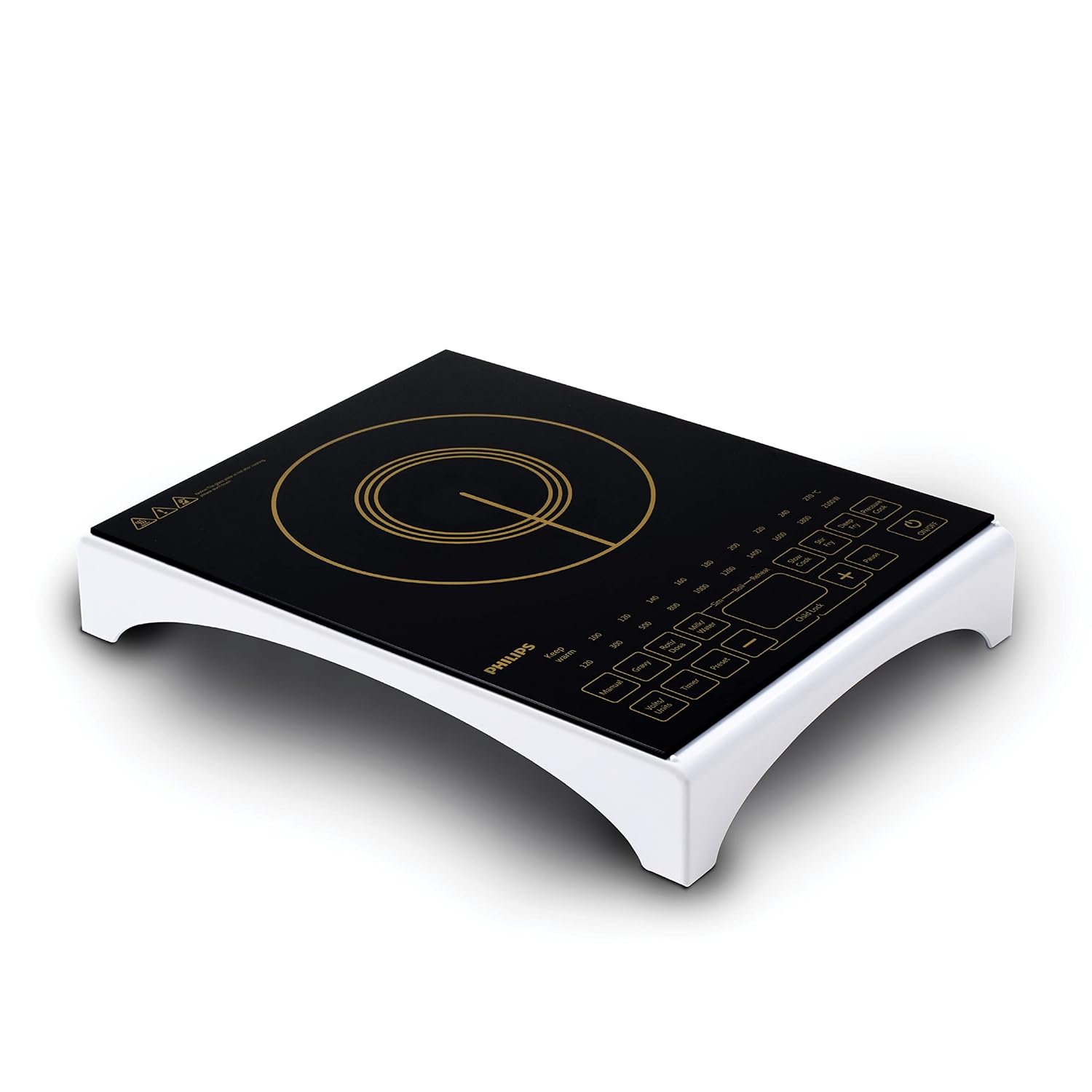
Philips Viva Collection HD4938/01 2100W Glass Induction Cooktop
Buyers wanting a premium full-glass Philips with a delay timer
Related Reading
- Best Induction Cooktop in India 2026 — All 24 models we list, with live prices
- Best Induction Cooktop in India 2026 — Top Picks — Our picks + the cookware compatibility trap
- Induction Cooktop Buying Guide India — How to choose
- Best Induction Cooktop for South Indian Cooking — Regional picks