Disclosure: This post contains affiliate links. If you buy through our links, we earn a small commission at no extra cost to you. Read our affiliate policy.
The secret to a crisp dosa or a fluffy idli is the batter: soaked rice and urad dal ground smooth and airy, then fermented. Grinding it is the hardest job you'll ask of a mixer grinder: a thick, heavy load for several minutes at a time.
Push an underpowered mixer too hard and the motor strains, the jar warms up and the overload switch trips. Warm batter can also ferment less well. So what do you actually need?
Every model below is one we list: rated 4★ or higher on Amazon, with at least 100 ratings and an Amazon "bought in the past month" badge (late September 2026). Picks are based on each model's listing and Amazon ratings; we haven't run hands-on tests.
1. What Each Wattage Can Handle
500W: fine for chutneys, smoothies and masala, and it can grind batter in small batches with rest breaks. If you make batter often, it will feel slow. The Bajaj Rex 500W is the best-rated budget option.
750W: comfortable for regular batter in normal family quantities. The Philips HL7756 is a well-proven choice, and Philips quotes 25 minutes of continuous grinding.
900–1000W: grinds full jars faster and suits large or daily batches. Several models in this range are also rated for long continuous running.
2. Rated Running Time Matters as Much as Wattage
A powerful motor that has to stop every few minutes is less convenient for big batches than a slightly smaller one rated to keep going. From the listings:
- Sujata Dynamix, Supermix (900W) and MG03 (1000W): 90 minutes of continuous running
- Philips HL7756 (750W): 25 minutes of continuous grinding
- Bosch Pro 1000W: 5 minutes on, 2 minutes off, up to 30 minutes
3. Top Picks for Dosa Batter
A. Best Overall: Sujata Dynamix 900W
- Motor: 900W with double ball bearings at 22,000 RPM, rated for 90 minutes of continuous running.
- Ratings: 4.5★ from 14,177 buyers, selling 500+ a month.
- Pros: built for long grinding sessions; a very large, well-rated review base.
- Cons: 3 jars, no juicer, and a plain design.
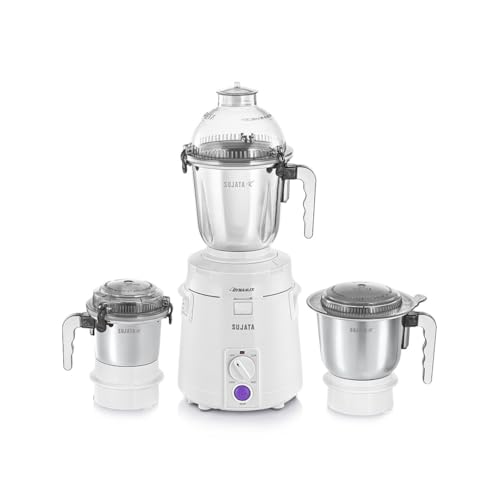
Sujata Dynamix 900W Mixer Grinder (3 Jars)
Heavy daily grinding, including idli and dosa batter
B. Hands-Free: Bosch Pro 1000W
- Motor: 1000W with overload protection.
- Design: lid locks and suction feet, so you don't hold the jar down; a blunt PoundingBlade for dry masala.
- Ratings: 4.3★ from 19,127 buyers, 1,000+ a month.
- Cons: rated for 5-minutes-on, 2-minutes-off cycles, so big batches need pauses.
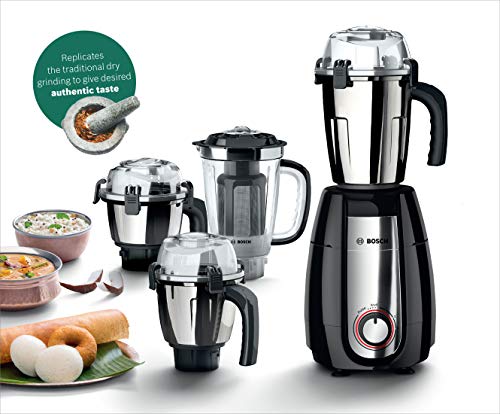
Bosch Pro 1000W Mixer Grinder (MGM8842MIN)
Buyers wanting 1000W and hands-free lid locks at a mid price
C. Best Value 1000W: Preethi Boltz 1000W
- Motor: 1000W Sigma W2 with 3D air cooling and overheat protection.
- Extras: 4 jars and lifelong free service with no labour charge.
- Price: about ₹5,800, the cheapest 1000W mixer we list; selling 1,000+ a month.
- Cons: 816 ratings so far.
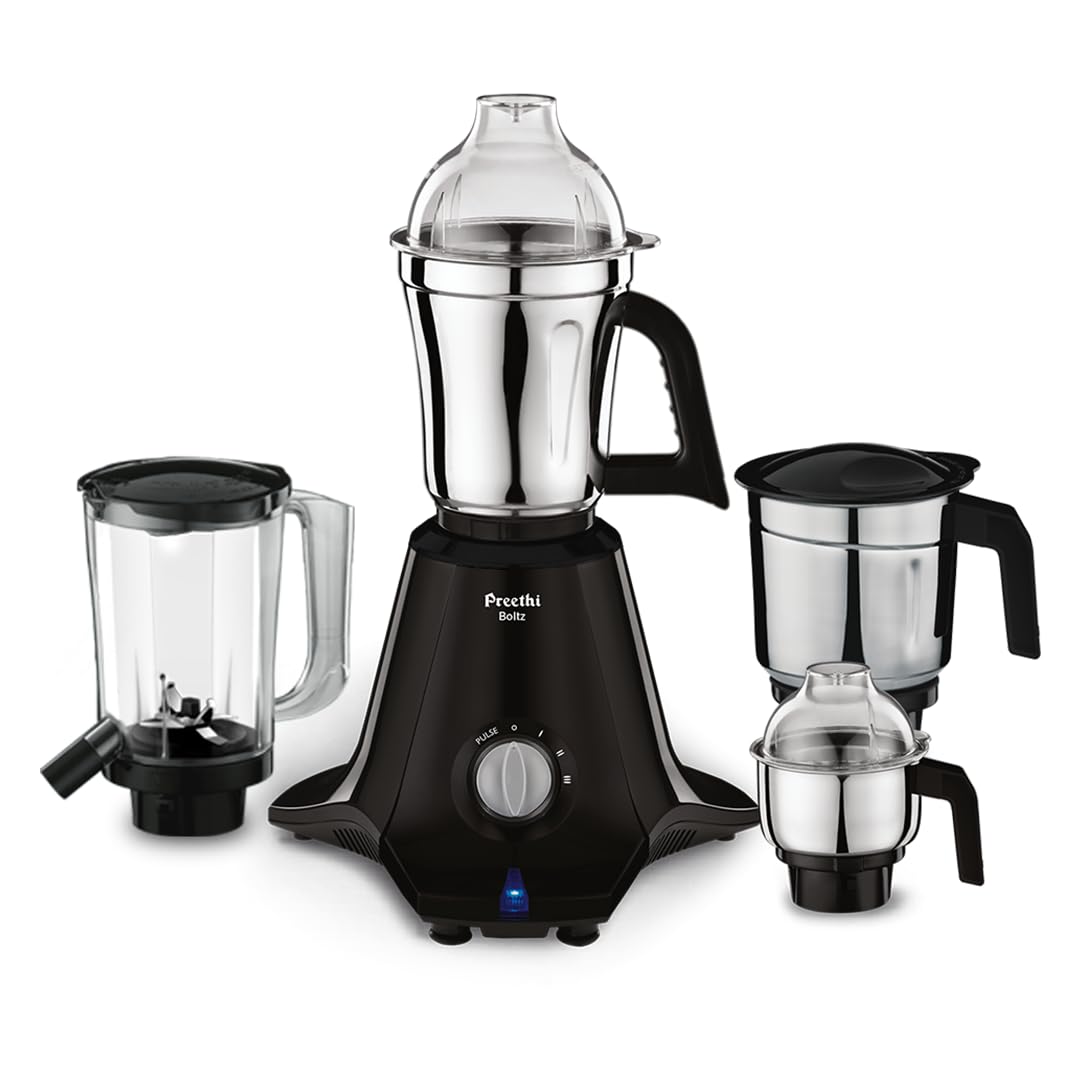
Preethi Boltz 1000W Mixer Grinder (4 Jars)
Buyers wanting 1000W from Preethi under ₹6,000
D. All-in-One: Preethi Zodiac MG-218 750W
- Motor: 750W Vega W5 with a 5-year motor warranty.
- Extras: a food-processor (Master Chef) jar for kneading and chopping, plus a centrifugal juicer.
- Cons: about ₹10,200, and 750W is slower with big batches than the 1000W options.
4. Features to Look For Beyond Wattage
1. Flow breakers: ridges on the inside of the jar push batter back into the blades so rice grains don't escape.
2. Overload protection: a resettable switch that cuts power before the motor overheats.
3. Ventilation: vents in the base help the motor shed heat during long grinds.
5. Comparison Table
| Feature | Sujata Dynamix | Bosch Pro 1000W | Preethi Boltz | Preethi Zodiac MG-218 |
|---|---|---|---|---|
| Wattage | 900W | 1000W | 1000W | 750W |
| Rated running | 90 min continuous | 5 on / 2 off, 30 min | Not stated | Not stated |
| Hands-free lid locks | No | Yes | Not stated | Safety lock |
| Rating (ratings) | 4.5★ (14,177) | 4.3★ (19,127) | 4.2★ (816) | 4.2★ (15,016) |
| Approx. price | ₹7,100 | ₹7,000 | ₹5,800 | ₹10,200 |
Final Verdict
- For big, frequent batches: the Sujata Dynamix 900W, or the Sujata Supermix with the same motor rating for about ₹800 less.
- If you don't want to hold the jar: the Bosch Pro 1000W.
- For 1000W on a budget: the Preethi Boltz.
- For one machine that also chops, kneads and juices: the Preethi Zodiac MG-218.
Frequently Asked Questions (FAQs)
1. Why does my dosa batter become hot while grinding? Friction from the blades and heat from a working motor. Grind in shorter batches, use chilled water, or add an ice cube while grinding.
2. Can I grind idli batter in a 500W mixer grinder? Yes, in small batches with rest breaks. If you make batter often, a 750W or larger motor is quicker and less likely to trip its overload switch.
3. Is a stone wet grinder better than a mixer grinder? A table-top stone wet grinder works slowly without heating the batter, and many cooks find it gives fluffier idlis. It's also bulkier and takes longer. A good 750W+ mixer grinder makes very good batter for most families and handles everything else too.
4. What is the ratio of rice to urad dal for dosa? A common ratio for crisp dosas is 3:1 (3 cups of idli or raw rice to 1 cup of whole white urad dal), with a teaspoon of fenugreek (methi) seeds to help fermentation.
5. How long should I run the mixer continuously? Follow your model's rating: Sujata's 900W models are rated for 90 minutes, Philips quotes 25 minutes for the HL7756, and Bosch rates its 1000W models for 5 minutes on, 2 off. Short bursts with a pause to scrape down the sides also give a smoother batter.
Related Reading
- Best Mixer Grinder in India 2026 — All 36 models we list
- Best Mixer Grinder for Wet Grinding — Batter tips and timings
- Best Mixer Grinder in India 2026 — Top Picks — Our top 5
- Best Induction Cooktop for South Indian Cooking — Dosa on induction